Switching from dry toilet paper to fresh-water washing is one of the most impactful upgrades you can make for your personal hygiene, long-term skin health, and household environmental footprint. Water cleans far more thoroughly than dry paper ever could, eliminating friction, reducing plumbing clogs, and leaving you truly refreshed.
When you decide to bring clean-water washing into your home, you will almost certainly face an immediate choice: bidet seat vs. bidet attachment.
While both options mount directly to your existing toilet without requiring a complete bathroom tear-out, they are fundamentally different devices. They operate on contrasting mechanical principles, hit vastly different price tiers, deliver contrasting levels of comfort, and require different installation procedures.
Here is an exhaustive, practical breakdown of everything you need to know about bidet seats and bidet attachments, covering engineering mechanics, plumbing safety, ergonomics, costs, hygiene standards, and lifestyle fit.
Bidet Seat vs. Bidet Attachment
These two bidets are among the types of bidets. The fundamental distinction between the two devices comes down to replacement versus add-on hardware:
- A bidet attachment is an inexpensive, ultra-thin mechanical bracket ($25 to $60) that clamps underneath your existing toilet seat. It runs strictly on ambient household water line pressure and requires no electrical power.
- A bidet seat ($80 to $650+) is a complete fixture that replaces your factory toilet seat entirely. It integrates motorized or mechanical wash wands, ergonomic weight support, and—in electric models—on-demand water heaters, heated seat rings, self-cleaning nozzle sterilization, and warm-air drying fans.
Detailed Comparison Table: Specifications, Features, and Capabilities
To understand how these two categories stack up across every functional parameter. For bidet seats specifically you will face with the issue of choosing between an electric bidet seat vs a non electric bidet seat. where as for bidet attachment, it’s mostly non-electric.
examine this side-by-side technical breakdown:
| Feature / Metric | Mechanical Bidet Attachment | Non-Electric Bidet Seat | Electric Smart Bidet Seat |
| Typical Purchase Price | $25 – $60 | $80 – $140 | $200 – $650+ |
| Installation Style | Clamps under existing seat | Replaces factory seat completely | Replaces factory seat completely |
| Plumbing Power Source | Static water line pressure | Static water line pressure | Motorized pump & line pressure |
| Electrical Requirement | None (100% mechanical) | None (100% mechanical) | 120V GFCI outlet (15A circuit) |
| Water Temperature | Ambient (Cold tap only) | Ambient (Cold tap only) | Instant, endless warm water |
| Heated Seat Ring | No | No | Yes (Multi-level thermostatic) |
| Drying Mechanism | Paper / Towel pat-dry | Paper / Towel pat-dry | Built-in warm-air dryer fan |
| Seat Angle / Gap | Creates 1/4″ forward tilt | Sits 100% flush on rim | Sits 100% flush on rim |
| Nozzle Adjustability | Fixed trajectory / dial aim | Lever-guided manual aim | Motorized (5+ position settings) |
| Specialty Wash Modes | Rear wash, basic front wash | Rear wash, basic front wash | Oscillating, pulsating, massage |
| Deodorizer | None | None | Active carbon air filter |
| Nightlight | None | None | Integrated bowl-glow LED |
| Ease of Bowl Cleaning | Difficult (must unbolt) | Quick-release latch button | Quick-release latch button |
What Is a Bidet Attachment? Deep Dive into Mechanics and Utility
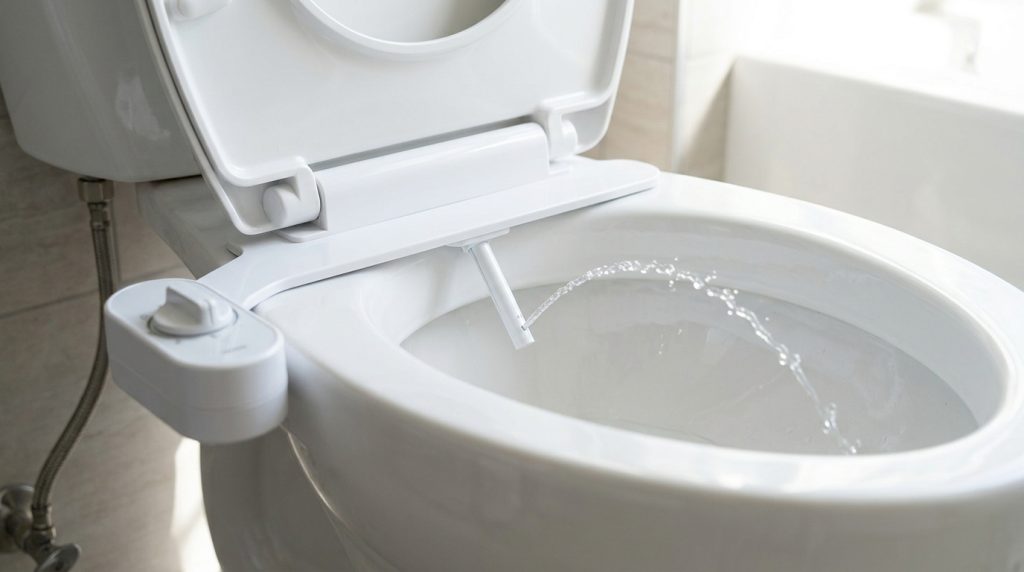
A bidet attachment is an ultra-slim bracket engineered to sit flat on your toilet bowl rim, secured directly beneath your existing toilet seat hinges.
1. How It Functions Mechanically
Attachments operate on fluid mechanics. When you turn the control dial on the right-hand panel, you open an internal ceramic or plastic valve. Municipal water pressure pushes a spring-loaded or gravity-fed plastic nozzle down from behind a protective splash guard.
As water exits through micro-apertures in the nozzle tip, it produces a focused spray. When you turn the dial back to the off position, the loss of water pressure causes an internal spring to retract the nozzle safely behind the guard.
A frequent initial concern from first-time buyers is asking: is bidet water clean? Yes. The water supplied to your attachment comes from your home’s potable drinking supply line before entering the toilet tank or bowl. These fixtures comply with ASME standard too.
2. Primary Benefits of a Bidet Attachment
- Incredible Affordability: For less than the cost of a dinner out, an attachment introduces you to water washing. In our article on how much does a bidet cost we did a we shows clearly that attachments are the most accessible entry point in modern plumbing.
- Zero Electrical Infrastructure: Because it relies solely on household water line pressure, you never have to worry about extension cords, running new conduit, or hiring an electrician.
- 100% Renter-Friendly: You can install an attachment in 15 minutes and remove it at moving time without leaving a trace, making it ideal for temporary leases and apartments.
3. Engineering Limitations and Drawbacks
- The Seat Gap and Hinge Stress: Because the mounting bracket sits directly under your toilet seat’s rear hinge bolts, it elevates the back of the seat by 1/4 to 1/2 inch. This lifts the front seat bumpers off the ceramic rim, forcing the seat to tilt forward. Sitting on an unsupported, slanted seat causes plastic fatigue and can crack the seat hinges over time.
- Lack of Water Temperature Control: In standard configurations, attachments pull water exclusively from the cold water line. If you live in an area with freezing winters your bidet attachment might have cold water. Ambient pipe temperatures can drop below 45°F (7°C), making for an uncomfortably brisk rinse.
- Difficult Cleaning Under the Mounting Plate: Over months of use, toilet splashback, mineral deposits, and bathroom dust seep underneath the plastic bracket. Because it is bolted down beneath your toilet seat, you cannot easily wipe the porcelain underneath without unscrewing the entire assembly.
- No Built-In Warm-Air Dryer: Unlike premium electric seats equipped with warm-air dryer fans, mechanical bidet attachments have no electrical heating components or air blowers. Once you finish washing, you are left wet. While you can pat dry with a few squares of standard toilet paper, damp skin can cause paper to shred and leave behind messy lint. The cleanest, most eco-friendly solution is pairing your attachment with reusable, 100% cotton bidet towels. Keeping a small stack on an adjacent basket lets you pat dry gently, eliminating friction and cutting household paper consumption to zero.
What Is a Bidet Seat? Deep Dive into Design and Technology
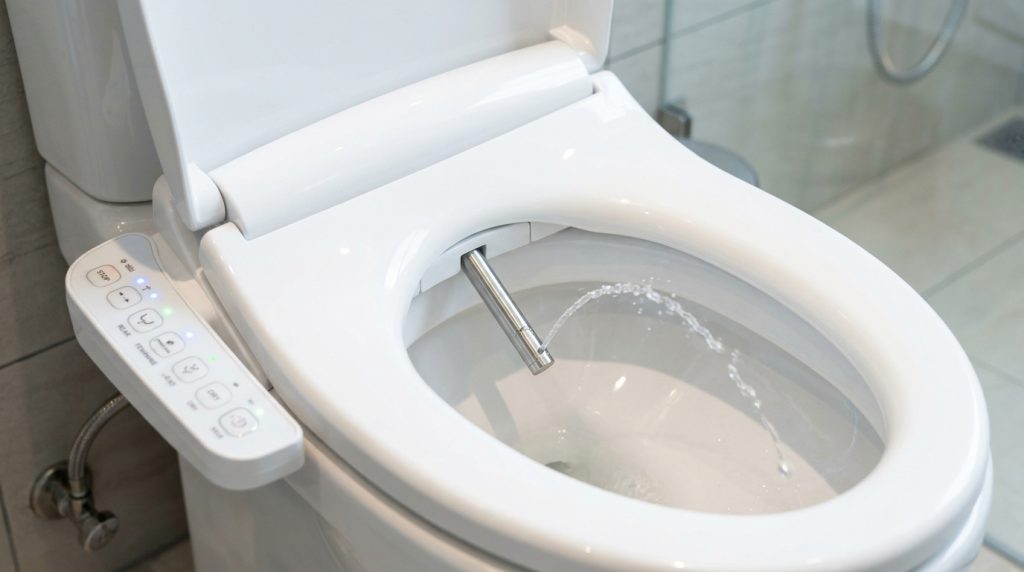
A bidet seat is a self-contained, fully integrated fixture engineered to replace your factory toilet seat completely. Rather than wedging an add-on plate between the porcelain and your lid, you unbolt your old seat and install a complete unit designed specifically for bidet washing.
1. Mechanical vs. Electric Bidet Seats
When comparing an electric vs non-electric bidets, bidet seats fall into two categories:
- Non-Electric Replacement Seats: These seats do not require an electrical outlet. They operate on manual water pressure using side levers, but because the entire seat is engineered as a single unit, they eliminate the seat-gap and forward-tilt issues common to attachments.
- Electric Smart Seats: These units plug into a standard household wall outlet. They contain internal circuit boards, heating elements, high-efficiency micro-pumps, and motorized wands that extend, oscillate, and sanitize automatically.
2. Advanced Performance Features in Electric Seats
- On-Demand Instant Water Heaters: Older electric bidets used small holding tanks that ran out of warm water after 30 seconds. Modern premium seats use instantaneous tankless heating coils that warm incoming water continuously.
- Heated Seat Rings: Electric seats feature adjustable internal heating elements that keep the seat surface comfortably warm, with multi-level temperature adjustments and automated energy-saver modes.
- Motorized, Multi-Position Nozzles: Rather than forcing you to shift your body on the seat to catch the stream, an electric bidet lets you adjust the nozzle position forward or backward with the press of a remote button.
- Warm-Air Drying Fans: Built-in blowers circulate warm air across your skin after washing, fully resolving how to dry off after using a bidet while eliminating the need for abrasive paper.
- Active Carbon Deodorization: An internal fan pulls air from inside the toilet bowl through an active carbon filter, neutralizing volatile organic compounds and odors before they enter the room.
Ergonomics and Structural Fit: The Seat Gap Problem Explained
One of the most noticeable differences between an attachment and a full seat is sitting comfort and mechanical balance.
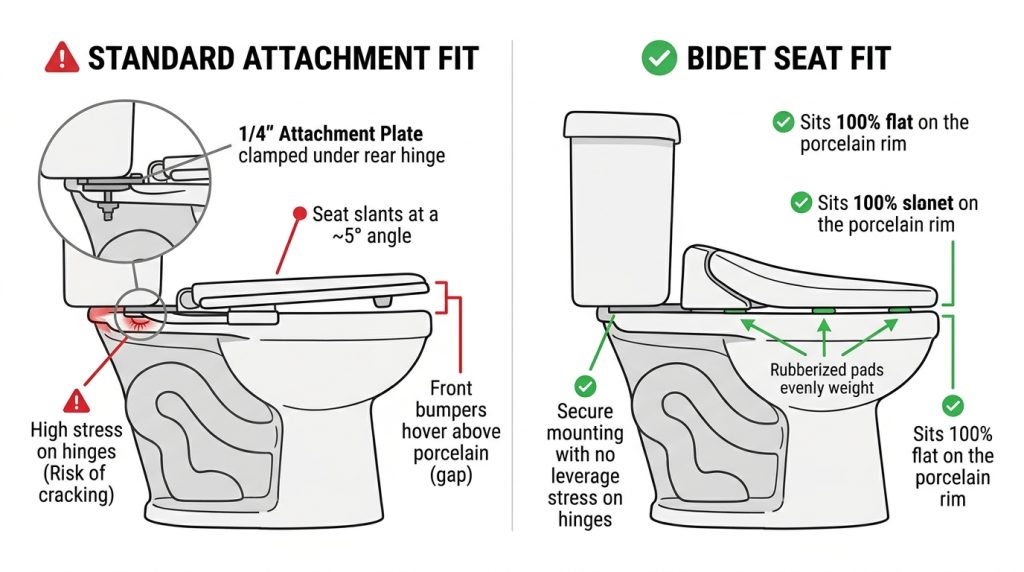
When you mount an aftermarket attachment, you raise the back hinge points while leaving the front contact bumpers unchanged. This creates a bridge effect: when a user sits down, their body weight flexes the unsupported center of the seat downward. Over time, this flex strips hinge screws, cracks wooden seats, and snaps plastic mounting pins.
To prevent this damage, attachment users must purchase aftermarket rubber toilet seat bumpers and stick them to the underside of the seat ring.
A replacement bidet seat completely eliminates this problem. Engineered as an integrated unit, the seat sits flat on the porcelain bowl, distributing weight evenly across heavy-duty rubber contact pads designed to support 300 to 500 pounds without shifting or creaking.
Hygiene, Feminine Health, and Medical Comfort
Water washing provides proven health advantages over dry paper, particularly for individuals managing sensitive skin or acute medical conditions:
1. Relief for Hemorrhoids, Fissures, and Sensitive Skin
Wiping inflamed skin with dry paper creates abrasive friction that aggravates micro-tears and delays healing. A peer-reviewed clinical trial on MedlinePlus.
found that targeted warm-water washing significantly lowers resting anal sphincter pressure, reducing rectal discomfort and spasms.
It is recommended to wash with water over wiping with dry toilet paper for individuals managing hemorrhoids, anal fissures, or recovering from colorectal surgery.
2. Feminine Hygiene Considerations
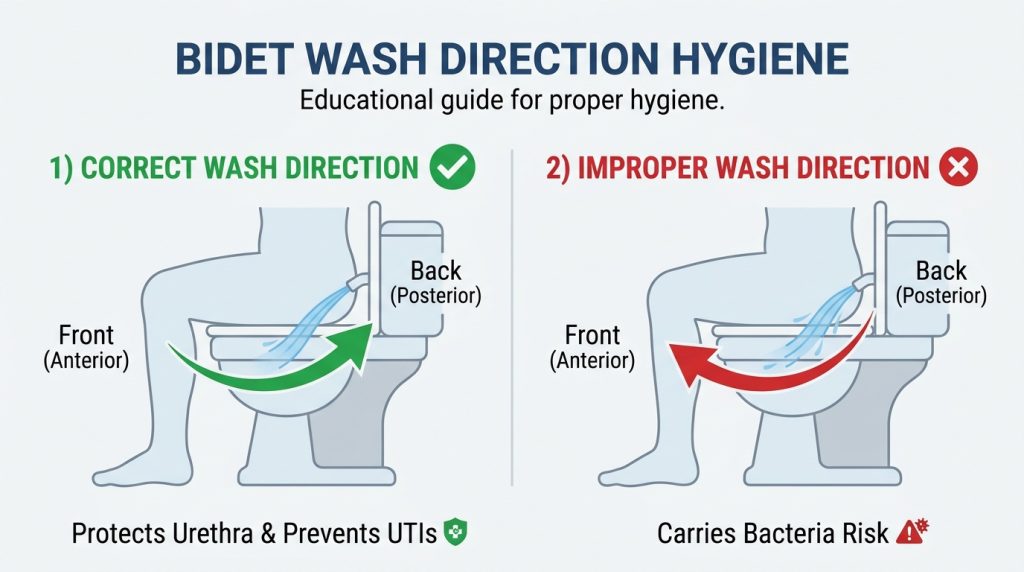
For women considering a bidet, this bidet is very good and sanitary for the private area. provided the water is directed correctly.
Proper personal care requires knowing how a woman should use a bidet specifically, directing the water flow strictly from front to back to avoid transferring colon bacteria toward the urethra, which can trigger urinary tract infections (UTIs).
Electric bidet seats provide dedicated “Feminine” wash buttons that automatically move the motorized wand forward, widening the spray and softening water pressure for gentle vaginal and perineal rinses during menstruation or postpartum healing.
3. Self-Cleaning and Nozzle Sterilization
- Attachments: Nozzles sit behind a passive plastic splash flap. Most models offer a basic “nozzle clean” dial position that rinses water down the exterior of the nozzle without extending it. If you don’t have that feature, simple take good care and clean your nozzle before use.
- Electric Seats: High-end models automatically rinse their stainless steel wands with fresh water before and after every use. Advanced models use electrolyzed water (Ewater+) or integrated UV lights to sanitize the nozzle head after each cycle.
Bidet Seat vs. Bidet Attachment: Which One Gives You Warm Water?
Both can provide warm water, but they do it in completely different ways—and electric bidet seats do it far better.
An electric bidet seat creates warm water on demand. It plugs into a standard electrical outlet and uses an internal heating element (either a mini-tank or a tankless ceramic coil) to heat incoming cold water instantly. You get consistent, adjustable temperature control at the push of a button, along with heated seats and warm-air dryers, with zero extra plumbing.
A bidet attachment can only deliver warm water ONLY if you buy a dual-temperature model. Because attachments have no electrical components or internal heaters, they cannot heat water themselves. Instead, you must run a flexible hose across your bathroom floor to tap into the hot-water supply line under your sink vanity.
This approach has significant downsides: you have to wait for the hot water to travel through your home’s pipes before it feels warm, routing an exposed hose across the floor can be unsightly or create a tripping hazard, and water pressure fluctuations can lead to sudden temperature spikes.
For reliable, instant, and comfortable warm water, a bidet seat is the superior choice.
Bathroom Compatibility and Installation Requirements
Before buying either fixture, verify your bathroom’s physical dimensions, plumbing connections, and electrical layout.
1. Bowl Dimensions: Elongated vs. Round
- Attachments: Because attachments fit under existing seats, they are generally universal and work on both round and elongated two-piece toilets.
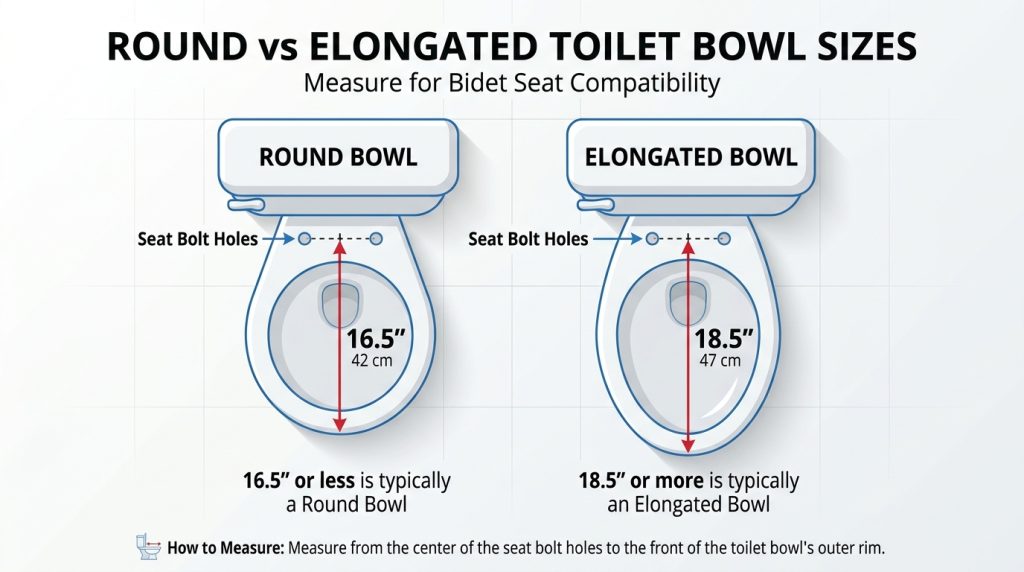
- Bidet Seats: You must measure your toilet bowl before ordering. Measure the distance from the center of the two seat mounting bolt holes to the very front tip of the porcelain rim:
- Elongated Bowls: Approximately 18.5 inches (47 cm).
- Round Bowls: Approximately 16.5 inches (42 cm).
2. One-Piece Toilets and French Curves
If your toilet has a molded one-piece ceramic design where the tank curves smoothly down into the bowl (known as a French curve), standard electric bidet seats often cannot mount properly due to housing clearance constraints. Here are the best bidets seats that are known to only fits a one piece French curves toilets.
3. Electrical Wiring and GFCI Outlets
Under the National Electrical Code (NFPA 70), any receptacle installed in a bathroom must have Ground-Fault Circuit Interrupter (GFCI) protection. Electric bidet seats require a standard 120V / 15A three-prong grounded outlet located within 3 to 4 feet of the toilet bowl. Running an electrical cord across bathroom floors or through doorways is unsafe and violates electrical safety standards.
Ease of Cleaning and Daily Bathroom Maintenance
Routine bathroom maintenance highlights another clear practical distinction between the two designs:
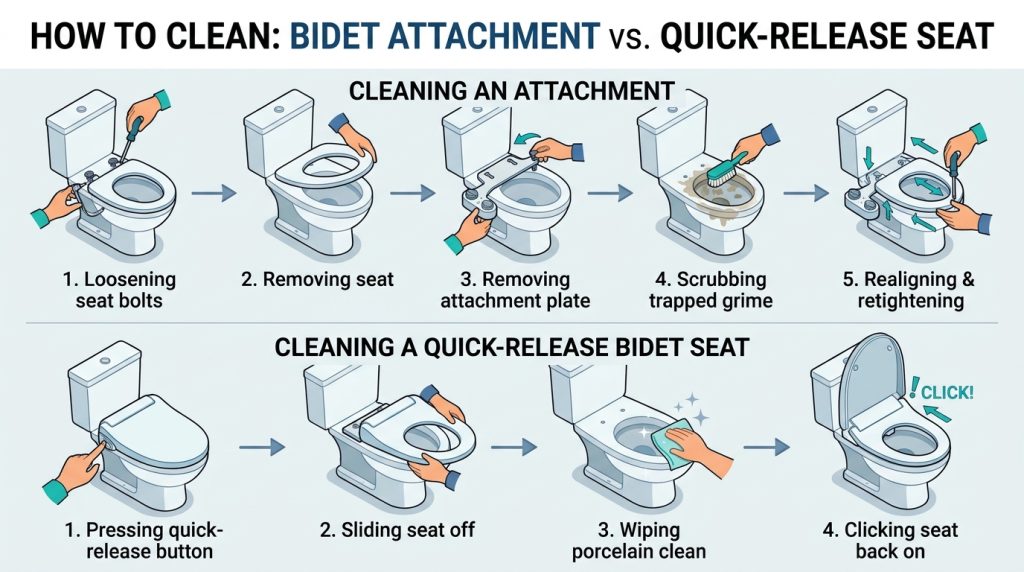
Because bidet attachments are clamped under tension against the porcelain, bathroom moisture, cleaning chemicals, and urine splashback inevitably seep under the mounting bracket. Cleaning this buildup requires loosening the mounting bolts, adjusting the plate, and retightening the hardware.
In contrast, modern electric and non-electric bidet seats feature a quick-release push button on the side. Pressing the button lets you slide the entire seat forward off its mounting plate in seconds. You can wipe down the bare porcelain rim, dry the surface, and slide the seat back onto the bracket until it clicks firmly into place.
Long-Term Durability, Reliability, and Maintenance
Understanding build quality helps you set realistic expectations for your investment:
1. Attachment Durability (Lifespan: 1 to 3 Years)
Because attachments retail for $25 to $60, they rely primarily on injection-molded ABS plastics, internal rubber O-rings, and mechanical dial springs.
- Common Failure Points: Over time, mechanical dials can loosen, internal spring-retraction mechanisms can stick due to hard-water mineral buildup, and plastic hose connections can develop minor leaks under continuous household water pressure.
- Maintenance: Unscrewing the nozzle cap every few months to remove hard-water scale helps maintain smooth water flow.
2. Bidet Seat Durability (Lifespan: 6 to 10+ Years)
Full bidet seats are engineered as durable plumbing appliances:
- Components: They feature ultrasonic-welded plastic housings, solid stainless-steel spray wands, and high-tensile brass or braided stainless-steel plumbing connectors.
- Maintenance: Most smart bidet seats include a removable mesh water-inlet filter at the supply connection. Rinsing this screen every 6 to 12 months catches pipe sediment and protects the internal valves and instantaneous heating elements.
Comprehensive Decision Guide: Which Model Fits Your Needs?
Which of these two bidets fits your need?
You Should Choose a Bidet Attachment If:
- You are on a strict budget: You want the hygiene benefits of water washing for under $60.
- You live in a rental property: You need a reversible installation that leaves zero marks and packs easily when moving.
- There is no electrical outlet near your toilet: You do not want to hire an electrician to run new conduit or GFCI wiring.
- You are new to bidets: You want an affordable way to test water washing before committing to a luxury fixture.
You Should Choose a Bidet Seat If:
- You prioritize warm water and comfort: You live in a cold climate and prefer warm water, heated seat surfaces, and gentle pressure adjustments.
- You want a completely hands-free drying process: Warm-air dryer fans eliminate the need for paper or manual drying.
- You care about clean bathroom aesthetics: You want a sleek, cohesive fixture that sits flat without awkward seat gaps, exposed plastic plates, or forward tilt.
- You are outfitting a bathroom for seniors or limited mobility: Wireless remotes, heated seats, and hands-free washing provide comfort and independence for individuals who have difficulty reaching or twisting.
Frequently Asked Questions
Can a bidet attachment crack your toilet seat?
Yes. Because an attachment plate sits only under the rear hinges, it creates a 1/4 to 1/2-inch gap under the front bumpers. Sitting on an unsupported seat causes it to flex in the middle, which can snap the plastic hinges or crack wooden seats over time. Installing adhesive rubber bumpers under the front rim restores balance and prevents cracking.
Do bidet attachments only spray cold water?
Standard attachments pull water directly from the cold water line feeding your toilet tank. While dual-temperature attachments exist, they require running an exposed flexible tube to the hot water shutoff valve beneath your bathroom sink. If your vanity is far from the toilet, routing that line creates an unsightly tripping hazard.
Are bidet seats difficult to install yourself?
Not at all. Installing a bidet seat takes 20 to 30 minutes with an adjustable wrench and a screwdriver. You simply unbolt your old seat, slide the new mounting bracket over the bolt holes, click the bidet seat into place, and connect the included T-valve to your toilet’s water supply line.
How much electricity does an electric bidet seat use?
Electric bidet seats consume minimal power. While their instant heaters draw 1,000 to 1,400 watts during an active 60-second wash, they spend most of their time in low-power standby mode. In standard households, an electric bidet seat adds between $2.00 and $4.50 per month to your electric bill.
Is an electric bidet seat safe next to water?
Yes. Modern electric seats are tested and certified under strict electrical safety standards, including UL 1431 and CSA C22.2. They feature sealed waterproof circuit boards (typically rated IPX4 or higher) and must be plugged into a GFCI-protected outlet that instantly cuts power if a ground fault is detected.
Both bidet attachments and replacement bidet seats offer a dramatic improvement over dry toilet paper, delivering superior hygiene, soothing comfort, and lasting environmental benefits.
If you want an affordable, functional way to start washing with water, an attachment is a dependable, renter-friendly choice. If you want a permanent bathroom upgrade with instant warm water, heated seating, warm-air drying, and clean aesthetics, an electric bidet seat is well worth the investment.
Final Words
When weighing a bidet seat vs. bidet attachment, your final decision comes down to budget versus everyday comfort. A bidet attachment offers an affordable, non-electric entry point that installs in minutes, making it ideal for renters or anyone testing water hygiene on a tight budget.
Conversely, a dedicated bidet seat provides a permanent, gap-free fit alongside premium features like endless warm water, heated seating, and warm-air drying. Both options vastly outperform dry paper, but choosing between a bidet seat vs. bidet attachment ultimately depends on whether you value minimal upfront cost or long-term, spa-like luxury.