A bidet is a plumbing fixture or attachment that rinses you with a targeted stream of water after using the toilet, replacing friction wiping with water cleansing. The water comes from the same clean supply line that feeds your sink, never from the toilet bowl or tank.
If you are asking what is a bidet because you have only met one abroad or in a hotel, this guide covers the basics: what it does, how it works, the main types, how to use one, and what to check before you buy. Fewer than 12% of Americans have one at home or work, according to Bio Bidet, so the questions are common.
The Primary Purpose of a Bidet
What is the purpose of a bidet? Personal hygiene. Toilet paper pushes residue across the skin, while water rinses it away. Sharp HealthCare says wiping can spread fecal matter and bacteria and that aggressive wiping can irritate skin, which is why many people rinse with a bidet instead of relying on paper alone.
So what does a bidet do in daily use? It cleans the area after you finish, with less contact and less paper. That is also the short answer to what is a bidet used for: cleansing after the toilet, after bowel movements and urination alike. A bidet does not replace handwashing, so wash your hands afterward either way.
Where Bidets Originated (A Brief Background)
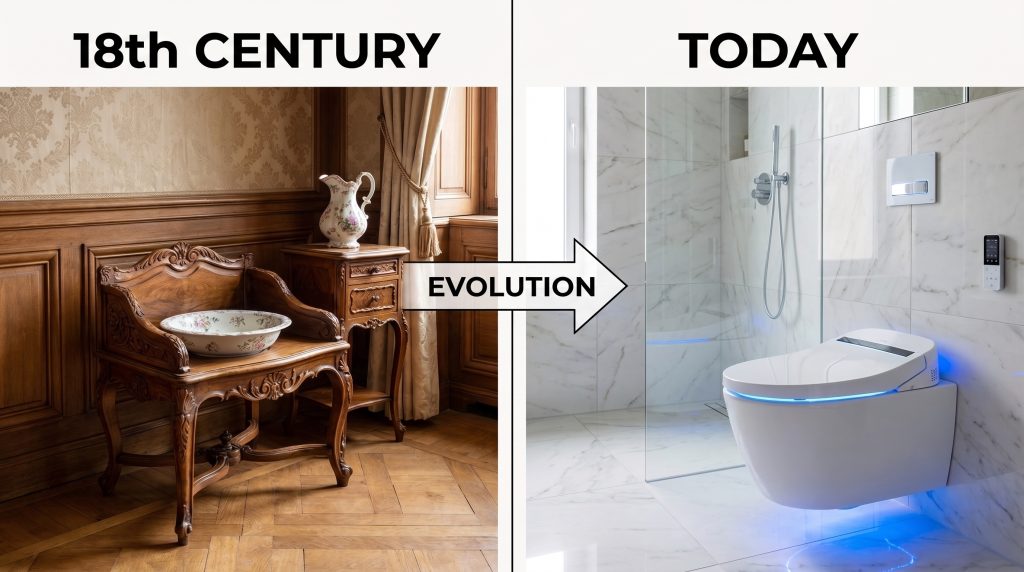
French furniture makers are generally credited with the bidet in the late 17th century. The earliest written reference is from Italy in 1726, and the name comes from the French word for “pony,” after the straddling position. By the 18th century the bidet had moved into bathrooms with its own faucet.
It stuck in Southern Europe. Italy and Portugal made bathroom bidets mandatory in 1975, according to a Wikipedia summary. In the Arab world the usual form is the handheld spray, called a shattaf or bidet shower. Japan took the idea furthest: TOTO launched the Washlet in the 1980s, and about 76% of Japanese households had an electronic toilet-bidet combination as of 2015.
English-speaking countries mostly skipped it. One history says American soldiers met bidets in European brothels during World War II and linked them with sin, and one scholar argues the English rejected them as French indulgence. Cheap, soft toilet paper filled the gap.
How Does a Bidet Work?
Where the Water Comes From
A bidet taps into your home’s cold water line behind the toilet. A T-valve or Y-connector splits that line, so one branch fills the toilet tank and the other feeds the bidet. It is the same supply that serves your shower, sink and refrigerator, unless you filter it. Plumbing codes keep it that way: some residential code, for one, requires bidets to be isolated from the drinking supply with an air gap or vacuum breaker, so nothing can flow backward into the pipes.
Warm water has two routes. Electric models heat the water inside the unit. Non-electric models with a hot connection borrow it from the hot shut-off valve under the bathroom sink, which should be within about six feet of the toilet.
How the Spray Mechanism Operates
Opening the valve sends water to a nozzle on a short arm. On most seats and attachments the nozzle retracts behind a cover when idle and extends when used. It sits angled behind the target area, so the stream reaches without the nozzle touching skin. A rinse setting washes the nozzle between uses.
You control strength with a dial or button, which opens the flow wider for more pressure. Many seats carry two nozzles, one for rear cleansing and one for a front wash. Handheld sprayers work the same way, except you aim the wand yourself, holding it about 1 to 2 inches from the area.
Manual Pressure vs. Electronic Controls
Manual models use a turn-dial or lever and run on your home’s water pressure alone. They need no power, but the spray strength depends on what comes out of your pipes.
Electronic seats add a pump, a heater and often a sensor, remote and dryer. A pump regulates flow, which tends to feel gentler than full household pressure. Some TOTO electronic bidet seats are one example: the spec sheets list a 120 V outlet on a circuit of at least 10 A, adjustable wash temperature up to about 102°F, and a remote model with warm-air drying. In a power cut, manual units keep working, while most electric seats stop; Bio Bidet notes at least one of its seats can run as a non-electric bidet during an outage.
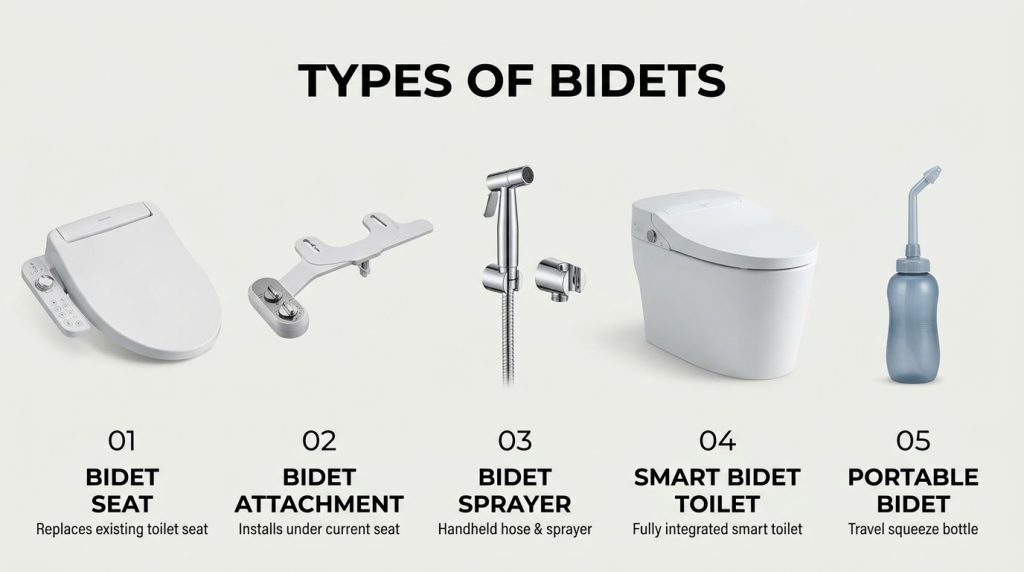
The 4 Main Types of Bidets Explained
| Bidet Style | Average Cost | Power Required | Installation Time | Key Strength | Best For |
|---|---|---|---|---|---|
| Bidet Attachment | $25 – $60 | None | 15 minutes | Renter-friendly, budget entry | Budget shoppers & renters |
| Bidet Toilet Seat | $70 – $600+ | Non-electric or 120V | 20–30 minutes | Best ergonomic comfort & features | Best overall balance of comfort |
| Handheld Sprayer | $25 – $50 | None | 15 minutes | Flexible manual spray control | Manual aiming & cloth diapers |
| Bidet Toilet (Integrated) | $800 – $2,500+ | Dedicated 120V / 15-20A | 1–2 hours (Plumber) | All-in-one luxury aesthetic | Luxury master bath remodels |
| Portable Bidet | $10 – $25 | None (Manual squeeze or AAA/USB) | Zero (Ready to use) | Compact, packable mobility | Travel, camping, postpartum & office use |
1. Bidet Attachments (The Budget-Friendly Choice)
An attachment bidet is a slim plastic bracket that mounts under your existing toilet seat bolts. It features a side control arm and taps directly into the water line. Attachments are strictly mechanical, require no electrical work, cost under $50, and serve as an ideal entry point for renters.
2. Bidet Toilet Seats (The Popular Upgrade)
So, what is a bidet toilet seat? It is a complete replacement for your factory toilet seat and lid, engineered with built-in nozzles, plumbing channels, and optional electronic controls. Non-electric seats offer ambient water washing with heavy-duty hinges, while electric bidet seats add heated water, warm air dryers, heated seats, and pulse spray modes.
3. Handheld Bidet Sprayers (“Bidet Showers” / Shattaf)
A handheld bidet sprayer features a trigger-operated spray head connected to your shutoff valve via a flexible 4-foot metal hose. Popular throughout the Middle East and Southeast Asia, handheld sprayers offer complete directional control and double as utility sprayers for washing cloth diapers and rinsing the toilet bowl.
4. Standalone Ceramic Bidets & Smart Toilets
- Standalone Fixture: A dedicated porcelain basin installed next to the toilet, requiring dedicated hot and cold plumbing rough-ins and separate drainage lines.
- Integrated Bidet Toilet: It is a single, unified smart toilet fixture where the bowl, tankless flushing mechanism, and electronic bidet engine are housed in a seamless ceramic skirt. Brands like Toto, Kohler, and select low-profile alternatives build these for modern, high-end remodels.
5. Portable Bidet
A portable bidet is an ergonomic squeeze bottle with an angled nozzle that lets you wash on the go without needing any plumbing connections.
How to Use a Bidet for Beginners: Step-by-Step
Step 1: Position Yourself on the Seat
Finish on the toilet first, then stay seated. Electronic seats often need you seated to run. With a handheld sprayer, lift the head from its mount and hold it 1 to 2 inches from the area you are rinsing.
Step 2: Start with Low Pressure and Adjust Slowly
Set the dial to its lowest level, then raise it gradually. Strong pressure is the most common beginner mistake. A clinic quoted in one medical review limits washing to under 5 seconds at weak pressure with a wide jet. Bio Bidet says electric seats typically spray 20 to 30 seconds or until you feel clean. Keep it short.
Step 3: Choose Your Wash Setting (Posterior vs. Feminine Front Wash)
Use the rear nozzle for a posterior wash. A feminine or front nozzle is for a gentle front rinse, and it’s advised that women should direct the spray front to back. Pulsing or oscillating modes are optional extras; a plain steady stream is enough to begin.
Step 4: How to Dry Off (Air Dryers vs. The Pat-Dry Method)
Electric seats with a warm-air dryer take about one to two minutes. Without one, let the water drip for a minute, then pat dry with a square or two of paper or a small towel. Pat, do not rub.
Four beginner mistakes to avoid: starting at high pressure, washing for too long, rubbing the skin dry, and touching the nozzle to your body. If something stings or feels uncomfortable, stop and lower the pressure next time.
Do You Still Need Toilet Paper with a Bidet?
You no longer wipe. Rinse first, then dab. That answers how do you wipe with a bidet: you do not wipe, you dry. Bio Bidet says once you get the feel for it, you will not need to wipe before or after.
The “Pat-Dry” Technique
Use one or two squares of paper to dab the area dry, working gently. A reusable option is a bamboo towel kept beside the toilet; for hygiene purpose, it’s best to use one a few times before washing it. Also, it’s best washing such towels in cold water with gentle detergent and no fabric softener.
How Built-In Warm Air Dryers Work
A dryer blows warm air from the seat for about one to two minutes, controlled by a remote or side panel. It is touchless and can help people with sensitive skin or hemorrhoids. Only electric seats have one, so a dryer is how you go fully paperless.
Key Benefits: Why Make the Switch to a Bidet?
Superior Personal Hygiene
Water rinses skin surfaces and creases, while paper can smear. In a simulation described in a medical review, hand bacteria were significantly lower when spray water was used before wiping. The catch is the nozzle. A 2022 study found daily nozzle cleaning lowered bacterial counts in spray water. For a deeper clean, remove the seat by its quick-release, wipe the nozzle with dish soap and scrub it with a toothbrush.
Relief for Sensitive Skin and Medical Conditions
For hemorrhoids, repeated wiping irritates, and water avoids that. In a study after hemorrhoid surgery, warm water spray and sitz baths gave no significant difference in healing, and patients preferred the spray. A Korean study found low-to-medium warm pressure lowered anorectal pressure. Research is still limited.
People also use bidets after childbirth and during pregnancy, when bending is hard. Sharp HealthCare says bidets help older adults and people with mobility issues clean themselves while keeping their privacy, and large remotes and dryers on electric seats cut down on reaching. Sellers say bidets may ease constipation and IBS, but they cite no independent evidence. Over-washing causes problems: a review found anal itching in 14% of surveyed users. Ask a clinician if you have stitches, incontinence or persistent symptoms.
Environmental Impact
Sellers estimate one toilet paper roll takes up to 37 gallons of water, 1.5 pounds of wood and 1.3 kWh of electricity to make. Americans use around 36.5 billion rolls a year, by Scientific American count. A bidet wash uses about one-eighth of a gallon. These manufacturing figures come from vendors and are widely repeated, so treat them as estimates, but the gap is large.
Long-Term Money Savings
Homes with bidets reduce toilet paper usage by up to 75%. Because payback periods depend on your baseline paper expenses, budget attachments offer the fastest financial return. Meanwhile, electric seats add minimal utility costs, consuming roughly 24 kWh per year (~$4 annually).
What to Consider Before Buying Your First Bidet
Toilet Bowl Shape: Round vs. Elongated
Measure from the seat bolt holes to the front of the bowl: roughly 16.5 inches indicates a round bowl, while 18.5 inches indicates an elongated bowl. Full replacement seats must match this shape, whereas attachments fit both. Also you should confirm that the bolt hole spacing measures between 5.5 and 7.5 inches and that there is adequate clearance in front of the tank.
Power Access: Is There a GFCI Outlet Nearby?
Electric seats plug into a 120 V outlet within cord reach, and manuals specify GFCI protection, often at least 15 A. Some bidet seats comes with a 48-inch cord and want an outlet within about 47 to 61 inches. If no GFCI outlet is close, an electrician has to add one. Non-electric units need no power at all.
Rental Status & DIY Installation Simplicity
Attachments and seats install in roughly 20 to 45 minutes with basic tools, and come off with a wrench, so keep your original seat. Check your lease before changing plumbing. Check supply pressure too: Some seats need at least 10 to 11 PSI while flowing and are rated for static pressure up to 110 to 116 PSI. Standalone bidets and bidet toilets need a plumber.
Frequently Asked Questions About Bidets
Does a bidet spray cold water?
Most non-electric attachments do, using line water. Electric seats heat it, and some models adjust up to about 102°F. Dual-temperature attachments tap your sink’s hot line within about six feet of the toilet.
Are bidets clean and sanitary for multiple users?
Yes with upkeep. The risk is nozzle contamination: a review found E. coli in the spray of 3 of 127 campus toilets, and a Japanese hospital study found bacteria on 254 of 292 nozzles. Use the self-clean rinse and wipe the nozzle regularly. Immunocompromised people should avoid shared hospital units.
Can you install a bidet yourself in a rental apartment?
Usually. Attachments and seats connect through a T-valve and remove easily, so they are common rental choices. Confirm your lease allows plumbing changes, and keep the original seat to reinstall when you move.
What happens if your bathroom has no electrical outlet?
Choose a non-electric attachment, seat or handheld sprayer, none of which need power. A dual-temperature model adds warm water through the sink line. An electric seat needs a GFCI outlet, so an electrician must add one first. Manuals advise against extension cords.
Final Thoughts: Is a Bidet Worth It?
So, what is a bidet, in the end? A simple, inexpensive way to clean with water instead of paper. Understanding how a bidet works, what a bidet does and how to use a bidet for beginners removes most of the mystery. If you want the lowest cost, start with an attachment. If you want warm water and a dryer, an electric seat is worth the outlet. Either way, you will use far less paper.