Somewhere around the second trimester, reaching, twisting and wiping stop being easy. Add constipation, sensitive skin and the risk of hemorrhoids, and it is no surprise that many expectant mothers wonder whether a bidet would make the bathroom more comfortable, and whether it is safe.
For most healthy pregnancies, using a bidet during pregnancy is not known to cause harm and is often more comfortable than wiping, as long as you keep the bidet water warm or lukewarm, the pressure low and the rinse external. There is one study worth knowing about, though, and an honest guide has to cover it.
This article explains the benefits, what the research does and doesn’t show, the exact settings to use, and how to handle the weeks after birth.
Is Using a Bidet During Pregnancy Safe?
For most healthy pregnancies, yes. Using a bidet during pregnancy with lukewarm water, low pressure and an external rinse is not known to cause harm and is often more comfortable than wiping. Never aim water inside the vagina.
The research is limited, and one study of high-risk pregnancies found a link between long-term bidet use and preterm birth. If your pregnancy is high-risk, or you have bleeding, leaking fluid or preterm labor symptoms, ask your doctor or midwife before using one.
Why a Bidet Can Help During Pregnancy
There are three practical reasons pregnant women reach for a bidet.
Easier Cleaning as Your Bump Grows
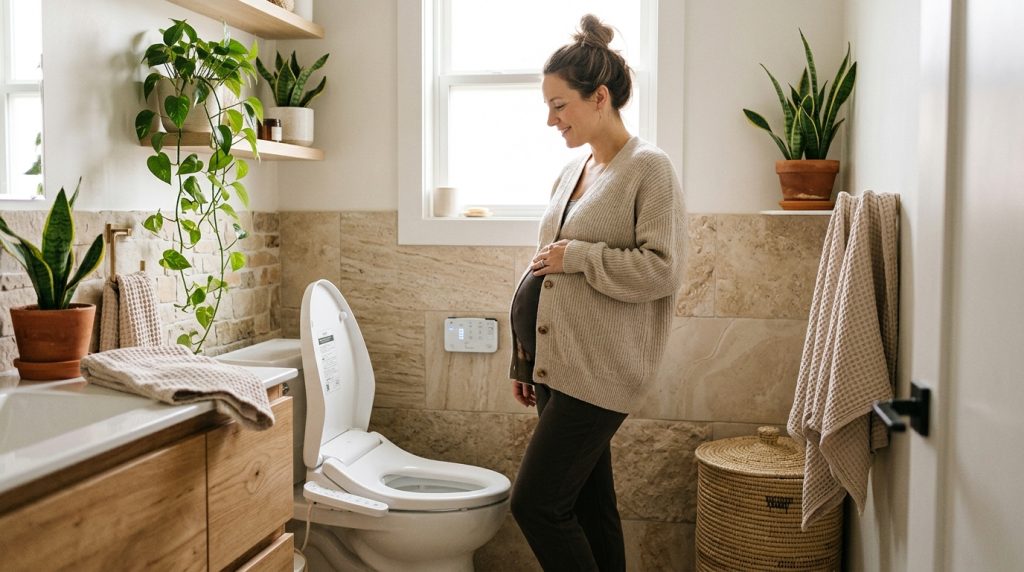
A larger belly makes reaching behind you awkward, and by the third trimester it can be tiring. A bidet lets you stay seated and rinse in seconds, with far less twisting and wiping.
Relief From Hemorrhoids and Constipation Strain
The NHS notes that constipation can cause piles, and its self-care advice includes cleaning with moist toilet paper rather than dry and patting the area instead of rubbing. Water does the same job even more gently. And notably, there’s a relationship between a bidet and hemorrhoids and bidet and UTI. Remember that a bidet only helps with cleaning. Fibre, fluids and not straining are what address the cause.
Gentler on Sensitive Skin
If your skin is more sensitive than usual, water avoids the friction of paper. In fact, using a bidet for sensitive skin and note a tissue paper is more comforting.
Using a Bidet During Pregnancy First Trimester
What the First Trimester Is Like
Early pregnancy often means more frequent bathroom trips, and for some people nausea and constipation. That makes quick, comfortable cleaning appealing, and a bidet can fit well.
Is a Bidet Safe in the First Trimester?
The research I am aware of doesn’t look at the first trimester specifically, and nothing suggests a gentle external rinse is a problem for a healthy early pregnancy. The usual rules apply: lukewarm water, low pressure, outside only, and never aim inside the vagina. And if you’re wondering if using a bidet counts as douching I already explained why that line matters.
The Study People Ask About
A Korean prospective cohort study followed 204 women with high-risk pregnancies, all admitted for preterm labor, premature rupture of membranes or a short cervix. Bidet users, who made up 32.8% of the group, had more abnormal vaginal bacteria (60.7% vs 44.2%), more E. coli colonisation (13.1% vs 3.3%) and more preterm births before 37 weeks (87.3% vs 73.0%) than non-users. The authors concluded that long-term bidet use was associated with these outcomes, but because the study is observational it does not show that bidets cause them.
Two cautions apply. The women were already high-risk, and the researchers studied long-term use. If your pregnancy is high-risk, ask your doctor or midwife before using a bidet. The CDC also lists pregnancy as a risk factor for yeast infections, so keep rinses short and external, and see what the evidence says about bidets and yeast infections for the safe habits.
Practical Tips for Early Pregnancy
If you are in the bathroom more often than usual, you still need only one short rinse per visit. Keep a soft bidet towel or soft paper within reach so you can pat dry without getting up. Or if your bidet is an high end bidet that has an automatic dryer among it many bidet features, then that’s a plus. Remember, sit and rest for a moment if nausea leaves you light-headed. Tell your doctor or midwife about any bleeding or unusual discharge rather than assuming it is hygiene related.
Second and Third Trimester Comfort
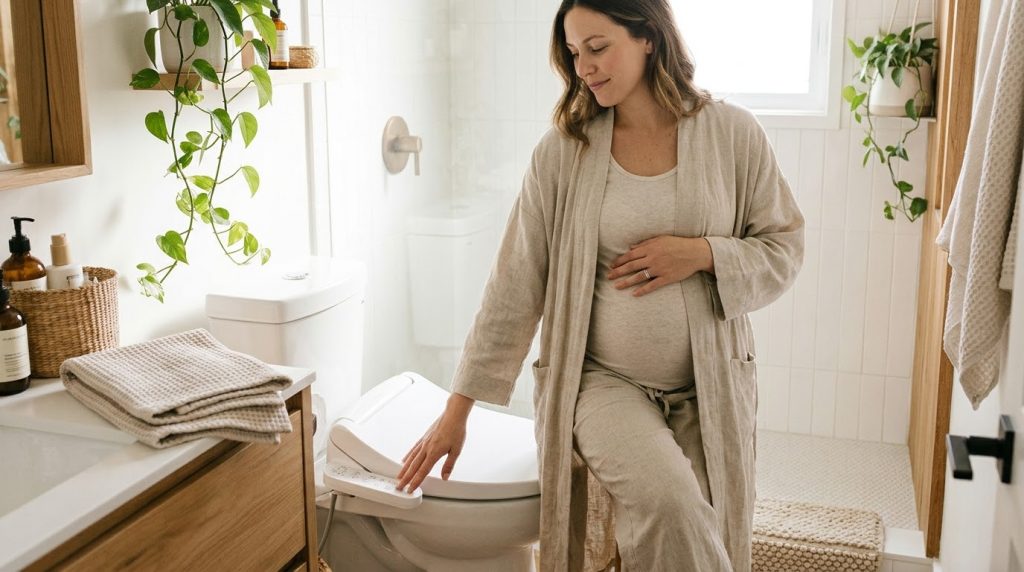
As the bump grows, balance and reach change. A bidet saves you twisting around, and a handheld bidet or bidet seat-mounted unit with controls you can reach from a seated position is easier than one you have to lean toward. Take your time standing up, and don’t sit for long periods, as the NHS advises for piles. If pelvic pressure or hemorrhoids make wiping painful, rinse gently and pat dry. Contact your midwife or hospital if you think your waters may have broken.
Safe Bidet Water Temperature and Pressure When Pregnant
Pregnancy doesn’t change how a bidet works, but it makes gentle settings more important.
Keep the Water Lukewarm
Choose water that feels comfortably warm on your hand, never hot. Hot water can harm delicate skin, and a cold blast makes you tense. If your supply runs cold, here is how to take the chill out of bidet water, which is an easy fix.
Use Low Pressure
Start at the lowest setting and raise it only if needed. A colorectal practice advises low pressure for hemorrhoids, and the same logic holds when your skin is more sensitive. Aim from a short distance and keep the stream on the outside.
Keep Rinses Short
About 15 to 30 seconds is plenty. Repeated washes through the day can dry the skin and don’t add to cleanliness. One rinse per toilet visit is enough.
How to Use a Bidet During Pregnancy, Step by Step
- Set the water first. Lukewarm and the lowest pressure.
- Sit comfortably. Lean slightly to one side if your bump gets in the way, and don’t strain.
- Rinse from front to back, outside only. Keep the stream off the vaginal opening and never aim inside.
- Keep it to 15 to 30 seconds.
- Pat dry. Use a clean bidet towel or soft paper and press, don’t rub. Here are ways to dry off after using a bidet, which is another options if you prefer not to use a towel.
- Skip scented soap. Plain water is usually enough, but if you want to use a soap with your bidet, then it depends.
Which Nozzle to Use
If your bidet has two, which is the front and rear wash, use the front nozzle for the vulva and the rear one for the bowels, front first and rear last. Although, not all types of bidet comes with this features but the luxurious bidet seats or all-in-one bidets.
Constipation and Straining
Rinsing is only half of bathroom comfort. The NHS advises plenty of fibre and water, regular exercise, not standing or sitting for long periods and not straining on the toilet. Check with your doctor, midwife or pharmacist before using any cream or medicine for piles.
Using a Bidet After Giving Birth
Postpartum Perineal Care
Boston Medical Center advises spraying warm water on the perineum after peeing or a bowel movement, then patting dry rather than rubbing. It also says not to wash inside the vagina, to wear cotton underwear and to change your pad every 2 to 4 hours. A bidet does the rinsing job in a way that is similar to a peri bottle, with less bending, but it is the same principle: warm, gentle and external.
Stitches, Tears and Hemorrhoids
If you have stitches, which BMC says dissolve on their own within 2 to 3 weeks, or sore hemorrhoids, ask your midwife or doctor before using a bidet, and use the lowest pressure and warm water. Stop if it stings or hurts.
Why Hygiene Matters More Now
Healing skin needs a clean routine. Wash your hands, keep the nozzle clean with a simple bidet hygiene routine, and avoid shared bidets until your tissue has healed. Call your OB/GYN if you have a fever of 100.4°F or higher, increasing pain or foul-smelling discharge, as BMC advises.
Mistakes to Avoid
- Spraying inside the vagina. Keep the stream external.
- High pressure or hot water. Both irritate sensitive skin.
- Scented soaps and washes. Plain water is enough.
- Skipping the dry-off. Damp skin invites irritation.
- Washing again and again. One short rinse per visit is plenty.
- A dirty or shared nozzle. as a pregnant woman using a bidet, make sure that the nozzle is always totally clean .
If you are unsure about a setting, test it on your inner wrist first. The water should feel comfortably warm, not hot, and the stream should feel soft, not sharp. Adjust the controls before you sit down, since fiddling halfway through is how pressure ends up too high, and note your preferred settings if your bidet lets you save them.
When to Talk to Your Doctor or Midwife
Contact your doctor or midwife if you have vaginal bleeding, leaking fluid, a change in discharge or odor, burning when you pass urine, abdominal pain or a fever. Also ask for advice if hemorrhoid pain or bleeding from the rectum doesn’t improve, and it’s also recommended checking with a doctor, midwife or pharmacist before using any pile treatment.
Frequently Asked Questions
Can I use a bidet in the first trimester?
There is no evidence that a gentle external rinse harms a healthy early pregnancy, though first-trimester use has not been studied specifically. Use lukewarm water, low pressure and an external aim, and ask your provider if you have bleeding or a high-risk pregnancy.
Can a bidet cause preterm labor?
I found no study showing that it does. One Korean cohort of high-risk pregnancies found long-term bidet users had more preterm births, but it was observational and the women were already at risk, so it doesn’t prove cause.
Is a bidet better than toilet paper during pregnancy?
Often more comfortable, since water avoids friction on sensitive skin and piles. You can still use soft paper to pat dry. If you’re uncertain, here is a full bidet versus toilet paper comparison for better understanding.
Can I use a bidet in the third trimester?
Yes, with the same settings, and many find it easier than reaching around a larger bump. If you think your waters may have broken or you are leaking fluid, contact your midwife or hospital rather than using the bidet.
Which bidet features matter when pregnant?
Adjustable pressure, warm water and a gentle stream matter most, plus a nozzle that is easy to clean and many more. You can find all these features in any bidet that is specifically made for women.
Final Thoughts
Using a bidet during pregnancy can make the bathroom easier and gentler when you keep it external, lukewarm and low-pressure. If your pregnancy is high-risk, or you have bleeding or leaking fluid, ask your doctor or midwife first, and never spray inside the vagina.