If you have ever wiped after a flare-up and winced, you already know why this topic matters. Dry toilet paper is rough on swollen, tender tissue, and the more you rub, the worse the itching and soreness get. That is the main reason bidets and hemorrhoids keep coming up together in doctors’ offices and online searches.
By replacing harsh mechanical friction with targeted, soothing water streams, using bidets and hemorrhoids management tools together helps calm local swelling, cleanse without direct contact, relax resting sphincter pressure, and promote essential tissue healing.
Bidets and Hemorrhoids
A bidet does not cure hemorrhoids, and it is not a treatment. What it does is clean the area with water instead of friction, which is often the gentlest option when the skin is already irritated. This guide explains how that works, where the limits are, and how to set the pressure, temperature and routine so the bidet helps rather than hurts. If you’re still weighing your options between wiping and washing, our bidet vs. toilet paper breakdown covers everything you need to know.
Are Bidets Good for Hemorrhoids?
For most people, yes. A bidet cleans with water instead of friction, which can reduce irritation, itching and pain after a bowel movement. It will not shrink or cure hemorrhoids, and the wrong pressure or temperature can make symptoms worse.
The key word is gentle. Lukewarm water, low pressure and a soft pat dry give you the benefit. High pressure, hot water and long sessions take it away. Medical research on bidets and hemorrhoids is still limited, so the advice below rests on how hemorrhoids behave and on guidance from colorectal specialists.
What Hemorrhoids Are and Why Wiping Makes Them Worse
Hemorrhoids are swollen veins in the lower rectum and around the anus. Internal ones sit inside and are usually painless unless they slip out. External ones sit under the skin around the opening and cause itching, tender lumps and aches, especially when sitting.
What Causes Them
The NIDDK lists the common triggers which are straining during bowel movements, sitting on the toilet for long periods, chronic constipation or diarrhea, a low-fiber diet, pregnancy, frequent heavy lifting and the weakening of support tissue with age. Fixing those habits does more for hemorrhoids than any product can.
Why Dry Paper Is the Problem
The skin around an irritated hemorrhoid is thin, swollen and easily scraped. Dry paper drags across it, and stool that is hard to clean off tempts you to wipe harder and longer. Each pass adds friction, and tiny tears can bleed or itch for days.
Cleaning with water removes residue without scraping, so you wipe less, or not at all. That is the logic behind the idea of using bidets for hemorrhoids, and it is the reasoning behind the warm water rinses advised after surgery.
How Bidets Help With Hemorrhoid Relief
The case for bidets and hemorrhoids comes down to four practical benefits.
Cleaning Without Rubbing
Water lifts residue away rather than dragging it across swollen skin. That is the single biggest advantage, because friction is what turns a mild flare-up into a miserable one.
Less Itching and Irritation
Residue left on the skin is a common cause of itching around the anus. A thorough rinse leaves less behind, so the urge to scratch or wipe again fades. Warm water can also relax the muscles around the anus. In a study of healthy volunteers published in the Journal of Korean Medical Science and summarised by Los Angeles Colon and Rectal Surgical Associates, low or medium warm water pressure reduced anal canal pressure about as well as a sitz bath.
Easier After Painful Bowel Movements
When sitting, straining and wiping all hurt, any step you can skip helps. A bidet lets you stay seated, clean in seconds and avoid reaching around to scrub a tender area.
Support After Hemorrhoid Surgery
The same practice reports a study of patients after hemorrhoid surgery that compared sitz baths with warm water sprays. It found no significant difference in wound healing or recovery time, though patients found the spray more convenient and satisfying. Always follow your surgeon’s instructions first.
Bidet vs Toilet Paper for Hemorrhoids
Paper cleans by friction and water cleans by flow. If your tissue is irritated, flow is gentler, and you can still use a small amount of soft paper or a clean towel to pat dry.
Can a Bidet Make Hemorrhoids Worse?
A bidet does not cause hemorrhoids. Straining, constipation and the other factors above do. But a badly set bidet can aggravate ones you already have.
Pressure Set Too High
A hard jet is the most common mistake. High pressure can inflame swollen tissue and, on a hemorrhoid that is already sore, feels like being scrubbed. The colorectal practice above advises starting low and increasing only if needed.
Water That Is Too Hot or Too Cold
Hot water can damage sensitive skin. Cold water can feel like a shock and make you tense up. Lukewarm is what you’re aiming for. If yours doesn’t heat up, let the water run for a few seconds first. Although, not all bidet sprays cold water, there are some that even provides instant warm water. And all this depends on the type of bidet you have.
Washing Too Long or Too Often
A rinse of about 15 to 30 seconds is plenty. Longer sessions, or repeated washes through the day, can strip the skin’s natural oils and leave it dry and itchy. Staying damp afterwards does the same, so drying matters. You can either use the air-dryer that comes with your bidet or use a bidet towel.
Dirty Nozzles and Harsh Products
Keep your nozzle clean; spraying buildup onto broken or irritated skin is asking for trouble. So, ditch the perfumed soaps and wipes, as well. A lot of people ask if bidets actually do more harm than good? But most issues really come down to hygiene and irritation like this.
How to Use a Bidet With Hemorrhoids, Step by Step
Using a bidet with hemorrhoids is simple once the settings are right.
- Set the water first. Choose lukewarm water and the lowest pressure.
- Finish your bowel movement. Don’t linger or strain on the seat, since sitting too long is itself a risk factor.
- Start the stream and aim gently. Direct the spray at the area from a short distance. Let the water do the work and don’t rub with your fingers.
- Rinse for 15 to 30 seconds. Raise the pressure slightly only if you are not clean, and never to a level that stings.
- Pat dry, don’t wipe. Use a soft towel or a few squares of soft paper and press, don’t drag. Leftover moisture can irritate and invite infection, so drying off properly after using a bidet is the right way to go about it.
- Skip scented soap. Water is usually enough. If you want soap, choose a mild, fragrance-free one and rinse it off completely.
Habits That Matter More Than the Bidet
A bidet makes cleaning gentler, but it will not fix what causes hemorrhoids. The NIDDK points to straining, long sits on the toilet, constipation and low fiber. Eat more fiber, drink enough water, move daily and go when you feel the urge. If you improve those habits, the bidet helps you recover faster and the flare-ups come less often.
Stop using the bidet and check with a clinician if it causes pain, burning or bleeding that is new or heavier. One colorectal practice suggests fragrance-free moist wipes as the fallback.
Bidet vs Sitz Bath for Hemorrhoids
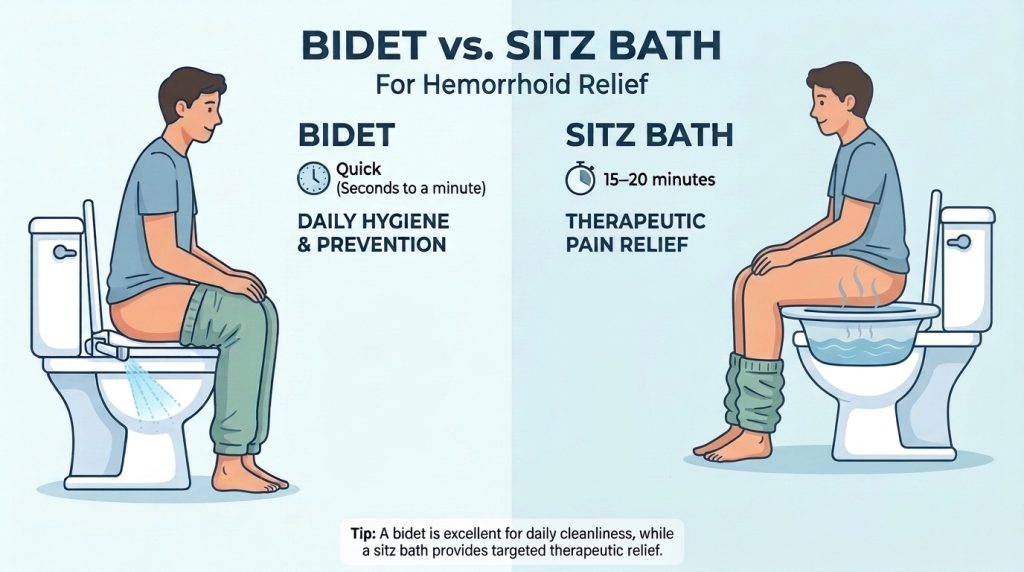
These two are partners, not rivals. A sitz bath is a shallow, warm soak of the hips and buttocks, usually 10 to 15 minutes. It soothes soreness and eases the muscles around the anus. A bidet cleans after the toilet, in seconds, with no tub or basin to set up.
The research on surgery patients mentioned earlier found sprays and sitz baths performed about the same for healing, with patients preferring the spray for convenience. In daily life, that means you can use the bidet after each bowel movement and add a sitz bath once or twice a day when symptoms flare, if your clinician agrees.
What to Look for in a Bidet If You Have Hemorrhoids
If you are choosing a bidet mainly for comfort, a few features matter far more than the rest.
- Adjustable pressure. This is the most important one. You need to be able to go very low, and to change it without leaning forward.
- Warm water. An inline or tankless heater, or a seat with temperature control, removes the cold shock. A cold-only attachment works, but it is harder on sore skin.
- A gentle, wide stream. Aerated or soft-spray modes spread the water out and feel less harsh than a narrow jet.
- A nozzle you can clean. Self-cleaning nozzles helps, and so does one you can pull forward and wipe. However, a full bidet hygiene routine is much more important.
- Stable, easy controls. Simple dials or a remote beat tiny buttons when you are uncomfortable.
When to See a Doctor
A bidet is comfort care, not diagnosis. Book an appointment if:
- when symptoms last more than a week despite home care, which is the NIDDK’s guideline.
- you see any rectal bleeding, because the NIDDK notes it can also signal conditions such as Crohn’s disease, ulcerative colitis or colon and rectal cancer.
- a hemorrhoid has slipped outside the anus and will not go back, or the pain is severe.
- you have a hard, very painful lump, which can mean a clotted external hemorrhoid.
Don’t assume that bleeding on the paper is “just hemorrhoids.” Getting it checked once is the safest course.
Frequently Asked Questions
Can a bidet cure hemorrhoids?
No. It keeps the area clean and reduces friction, which helps symptoms settle. Treating the cause, with fiber, fluids and less straining, is what lets hemorrhoids shrink. Larger ones may need medical treatment.
Is a bidet better than wet wipes for hemorrhoids?
Usually, yes. Plain water has nothing in it to irritate, while many wipes contain fragrance, alcohol or preservatives.
Is cold or warm water better for hemorrhoids?
Lukewarm is the best. Hot water can damage sensitive skin, and very cold water is uncomfortable and makes the muscles tighten. There are ways to make your bidet water warm if the unit runs cold water.
Can I use a bidet after hemorrhoid surgery?
Often, but ask your surgeon first. Research summarised by the colorectal practice cited above found warm water sprays and sitz baths healed wounds about equally. Use low pressure and follow the aftercare plan you were given.
Can pregnant women use a bidet for hemorrhoids?
Pregnancy is a recognised cause of hemorrhoids, and many women find water cleaning easier than wiping. Use low pressure and lukewarm water, and check with your midwife or doctor if you have complications. Here a portable bidet can also be of good use.
Final Thoughts
Bidets and hemorrhoids make a sensible pairing when the bidet is set gently. Water cleans without the friction that makes flare-ups worse, and it lets you skip the wiping that hurts most. It is a comfort tool, not a cure, so keep working on fiber, fluids and straining, and see a doctor if symptoms last a week or you notice bleeding.