Washing with clean water beats wiping with dry toilet paper every single time. It feels cleaner, cuts down on plumbing clogs, protects sensitive skin, and stops the cycle of buying bulky paper packs. Once you decide to make the change, however, you quickly face an overwhelming assortment of hardware styles, plumbing connections, and price tags.
Understanding the differences between the four primary types of bidets: seats, attachments, sprayers, and standalone fixtures is the most reliable way to avoid buyer remorse. Whether you are renting a studio flat with zero electrical outlets or remodeling a master bathroom from the subfloor up, this practical guide breaks down how each style works, what they cost, how they install, and which one fits your daily routine best.
Overview: The 6 Main Types of Bidets at a Glance
The entire bidet universe splits into distinct physical form factors:
- Bidet attachments: Thin mechanical brackets that sandwich directly beneath your existing toilet seat.
- Bidet toilet seats: Full seat-and-lid replacements equipped with internal plumbing manifolds and manual or electronic controls.
- Handheld bidet sprayers: Flexible hose-and-trigger wands mounted on the side of the toilet tank.
- Standalone ceramic bidets: Separate, dedicated porcelain basins plumbed permanently into the floor and wall.
- All-in-one bidet toilets (smart toilets): Unified luxury fixtures combining a high-performance ceramic toilet and an electronic bidet into one seamless unit.
- Portable bidets: Handheld squeeze bottles and travel-sized battery units that require zero installation.
Here is how these bidet styles compare side by side across installation footprint, power demands, and budget:
| Type | Price range | Install | Power | Best for | Water temperature |
| Attachment | $45 to $120 | Easy, DIY | None | Renters, beginners | Cold, or hot with a hookup |
| Seat | $170 to $650 | Easy to moderate | None (manual) or 120 V (electric) | Full features | Cold (manual) or heated (electric) |
| Handheld sprayer | $40 to $120 | Easy, DIY | None | Flexible cleaning | Cold, or mixed with a hot line |
| Standalone | $500 to $1,500, plus plumbing | Hard, plumber | None | Remodels | Hot and cold taps |
| All-in-One Smart Toilet | $900 – $4,500+ | Hard, plumber | Dedicated 120V line | Master bath remodels | Instant cold or warm (user’s choice) |
| Portable Travel Bidet | $10 – $35 | Instant (Zero install) | None | Travel, camping & postpartum | User-filled warm/cold |
1. Bidet Attachments: The Budget-Friendly Entry Point
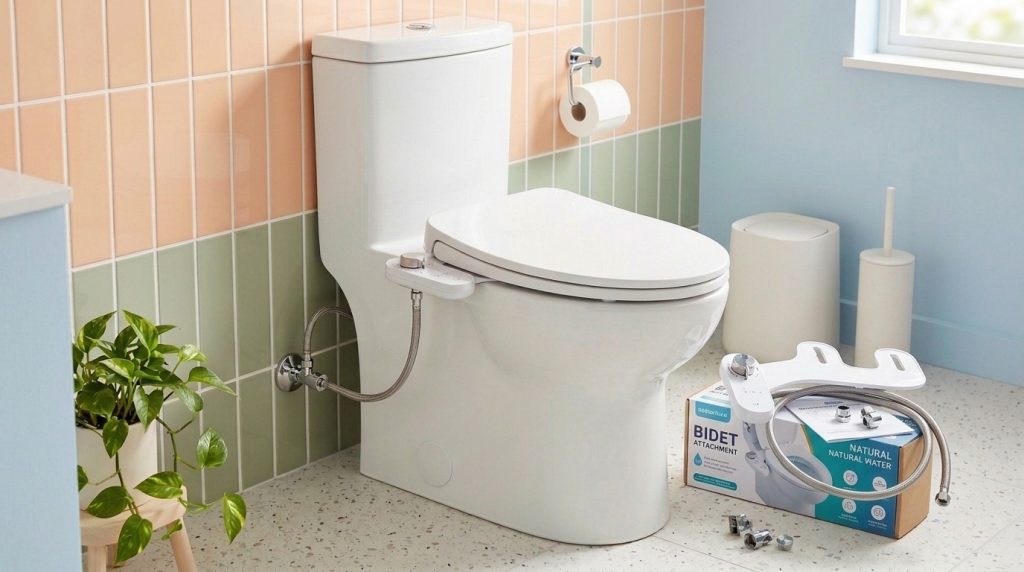
A bidet attachment is a slim plastic plate—usually less than half an inch thick—that bolts underneath your current factory toilet seat. It features a compact control arm jutting out on the right side with one or two manual turn dials.
How Bidet Attachments Work
Bidet attachments require no electricity or batteries. They operate entirely on the static water pressure coming out of your bathroom wall shutoff valve.
When you install an attachment, you remove your toilet seat, set the flat plastic bracket across the bolt holes, and bolt the seat back on over it. You then screw a small metal T-valve adapter onto your toilet tank’s fill valve shank, running a flexible braided hose over to the attachment bracket. Quality diverters are certified under IAPMO plumbing and backflow standards, ensuring that rinse water cannot siphon backward into your home’s potable drinking supply under negative pressure events.
Turning the control knob twists an internal mechanical disc valve. As the valve opens, pressurized tap water pushes an internal spring piston forward, dropping a spray nozzle downward and angling a clean stream toward your perineal area. When you shut the dial off, water pressure drops, and an internal return spring pulls the nozzle back behind a protective plastic splash guard.
Key Pros and Cons of Attachments
The Good:
- Ultra-low barrier to entry: Most quality attachments cost between $25 and $50.
- Completely reversible DIY setup: You can install one in 15 minutes using an adjustable wrench and screwdriver. When your lease ends, taking it off leaves zero evidence behind.
- No electrical outlets needed: Safe for older bathrooms lacking nearby electrical outlets.
The Trade-Offs:
- Ambient water only: Basic attachments tap directly into the toilet fill line, which carries unheated tap water. In winter months, that water can feel icy on sensitive skin.
- Seat slope angle: Placing a plastic bracket under the back hinge can lift the rear of your toilet seat slightly, creating a shallow downward angle. You may need to stick rubber riser bumpers under the front of your seat ring to keep it level.
Best For
Attachments are the best bidet type for renters, college students, budget-conscious shoppers, and curious beginners wanting to test water hygiene.
2. Bidet Toilet Seats: The Everyday Comfort Upgrade
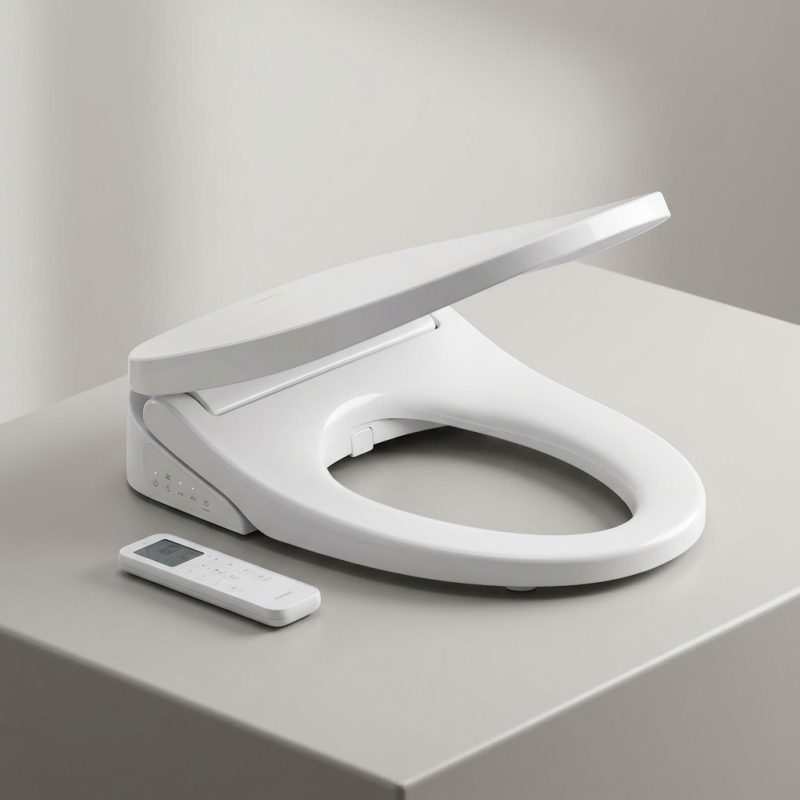
If you want an integrated look without modifying your bathroom walls, a bidet toilet seat represents the modern standard for residential bathrooms. Unlike attachments, a bidet seat completely replaces your original plastic or wooden seat and lid with an all-in-one hygiene hub.
When evaluating seats, the primary decision point is electric vs non electric bidet seat hardware:
Non-Electric Bidet Seats
Non-electric seats house internal water channels, mechanical control knobs, and dual-nozzle spray wands inside a single molded seat frame.
- The Mechanics: They run purely on line pressure, requiring zero plugs or wiring.
- The Advantage over Attachments: Because the nozzles and hinges are designed together as a unified unit, there is no awkward seat tilting, no gap under the rim, and the seat frame is structurally sturdier than an attachment squeezed under an old lid.
Electric Bidet Seats
Electric bidet seats turn an ordinary porcelain toilet into a luxury personal care fixture. They plug into a standard three-prong wall outlet (120V) and contain microprocessors, water heating chambers, safety sensors, motorized drive gears, and centrifugal drying fans.
- Instant Ceramic Water Heaters: Instead of hitting you with cold tap water, high-output ceramic heating cylinders flash-heat incoming water in fractions of a second, providing continuous warm water that never turns chilly.
- Heated Seat Rings: Resistance thermal wire wrapped inside the seat ring keeps the plastic at a cozy 95°F to 104°F, eliminating the unpleasant shock of sitting on cold porcelain in winter.
- Motorized Stainless Steel Wands: A miniature stepper motor drives a sanitary metal wand forward or backward at the touch of a button, letting you aim the spray accurately without wiggling around on the seat.
- Warm-Air Drying Blowers: A heating coil and small fan push tempered air over the perineum, evaporating residual moisture so you can ditch toilet paper completely.
- Skin & Occupancy Sensors: A capacitive touch sensor or weight-activated micro-switch inside the seat ring ensures the wash functions remain locked until someone sits down, preventing accidental room spraying.
Fit and Dimension Requirements
Bidet seats are precision-manufactured to match standard toilet bowl geometries governed by North American fixture dimensions in ASME A112.19.2 ceramic plumbing fixture standards:
- Round Bowls: Measure roughly 16.5 inches from the center of the bolt holes to the front tip of the bowl rim.
- Elongated Bowls: Measure roughly 18.5 inches from the bolt holes forward. Elongated bowls are more common in modern construction and offer greater internal clearance.
- Tank Clearance: You also need roughly 1.5 to 2 inches of flat clearance between the bolt holes and the vertical face of the toilet tank so the bidet’s rear hinge casing fits without jamming against the porcelain.
Best For
Bidet seats are the top choice for homeowners, apartment owners, people managing hemorrhoids or limited mobility, and anyone seeking temperature-controlled washing without renovating the bathroom.
3. Handheld Bidet Sprayers (Shattaf): Maximum Control and Versatility
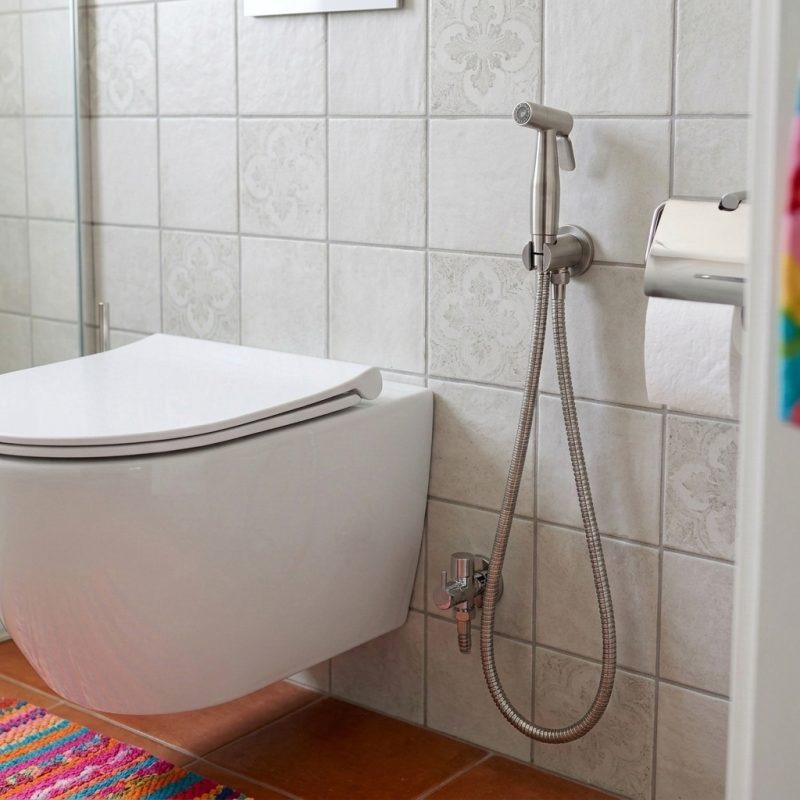
Popular across Europe, Southeast Asia, and the Middle East, the handheld bidet sprayer—often referred to as a “bidet shower” or shattaf—looks and behaves like the high-pressure pull-out sprayer on a kitchen sink.
How Handheld Sprayers Work
The system consists of three parts: a metal T-diverter valve that threads to your toilet supply shutoff, a 4-to-5-foot braided flexible hose, and a trigger-actuated spray wand that sits in a holster clipped to the side of the toilet tank or anchored to the adjacent wall. Flexible hoses engineered for these setups adhere to ASME flexible water connector guidelines to guard against sudden pressure spikes.
To use it, you lift the sprayer from its holster, hold it inside the toilet bowl opening, point the nozzle head manually where you want water, and squeeze the spring-loaded thumb lever. Squeezing lightly produces a gentle rinse; depressing the lever fully delivers a strong, high-pressure jet stream.
Why People Choose a Spray Wand
- 360-degree aiming control: Fixed seat nozzles spray along a preset track. A handheld wand lets you adjust angle, height, and approach direction by hand.
- Multi-purpose utility: Because the wand is on a long flexible hose, it doubles as a heavy-duty bathroom utility tool. It allows you to rinse reusable cloth diapers directly into the toilet water, wash muddy shoes, spray down pet paws, and scrub the toilet bowl during deep cleaning.
- Low hardware footprint: It leaves your existing toilet seat untouched, preserving the factory appearance of your bowl.
Critical Safety Rule: The T-Valve Shutoff
The single biggest mistake homeowners make with handheld sprayers is leaving the metal T-valve diverter permanently turned on.
The flexible spray hose and the hand wand’s trigger valve are not designed to endure continuous, static municipal line pressure (40 to 80 PSI) 24 hours a day. If a home experiences a nighttime pressure spike, an unmonitored hose under constant strain can rupture or leak at the trigger gasket, causing severe floor damage.
Always shut the lever on the T-diverter valve off after every use. Getting into this habit keeps municipal pressure contained inside your rigid home pipes rather than testing the rubber core of your spray hose.
Best For
Families with babies using cloth diapers, pet owners, households with multi-generational cleaning needs, and anyone comfortable using manual aim for personal hygiene.
4. Standalone Ceramic Bidets: The Traditional Luxury Choice
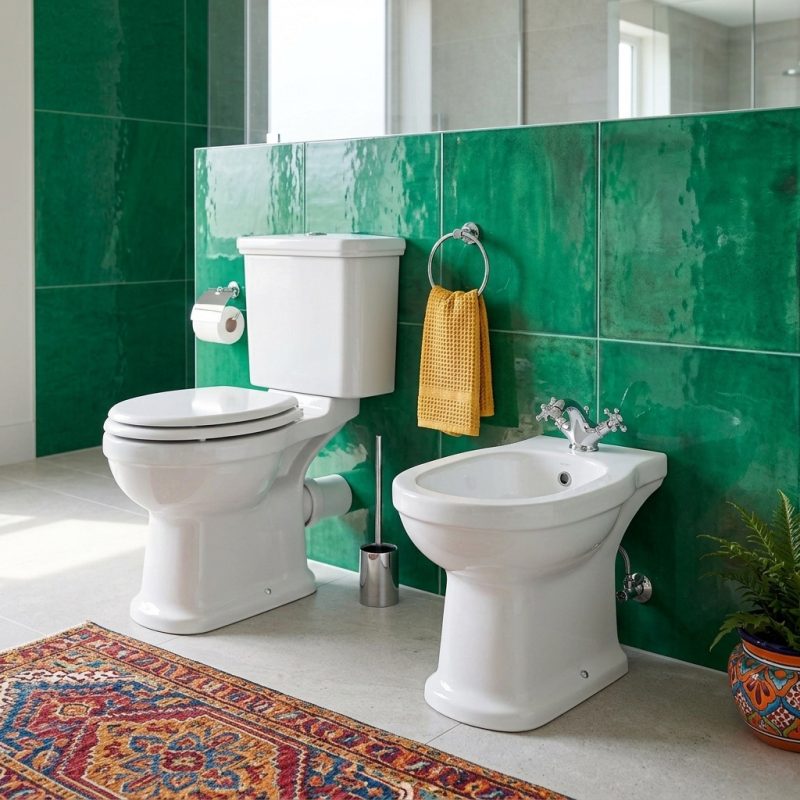
When people picture historic European bathrooms, they picture the standalone ceramic bidet. This is a separate, low-rimmed porcelain basin installed directly beside the primary toilet bowl.
How Traditional Porcelain Bidets Function
Standalone fixtures do not replace your toilet; they sit right next to it. They do not handle solid waste.
- You use the regular toilet as normal.
- You stand up, move over to the bidet basin, and straddle it facing either toward the wall faucet handles or away from them.
- You turn on the hot and cold water taps to mix your desired temperature.
- Water fills the ceramic basin or shoots upward through a directional vertical spray nozzle built into the base of the porcelain, allowing you to wash manually using water and mild soap.
- You drain the dirty water through a standard mechanical pop-up stopper linked to the building’s waste lines.
Remodeling Requirements & Costs
Installing a standalone porcelain bidet requires significant structural planning:
- Floor space: You must have a bathroom wide enough to accommodate two full-sized plumbing fixtures side-by-side, maintaining at least 15 to 18 inches of clearance from the bidet centerline to adjacent walls.
- Plumbing rough-ins: A standalone fixture needs its own dedicated hot and cold freshwater pipes running through the wall, plus an independent 1.5-inch or 2-inch drain pipe drilled into the subfloor.
- Total expense: Between the porcelain basin ($300 to $900), the specialized multi-handle brass faucet trim ($150 to $400), and licensed plumber labor to open walls and run waste drains ($800 to $2,000+), adding a standalone bidet can easily exceed $1,500 to $3,000.
5. All-in-One Smart Bidets (Integrated Bidet Toilets): The Ultimate Luxury
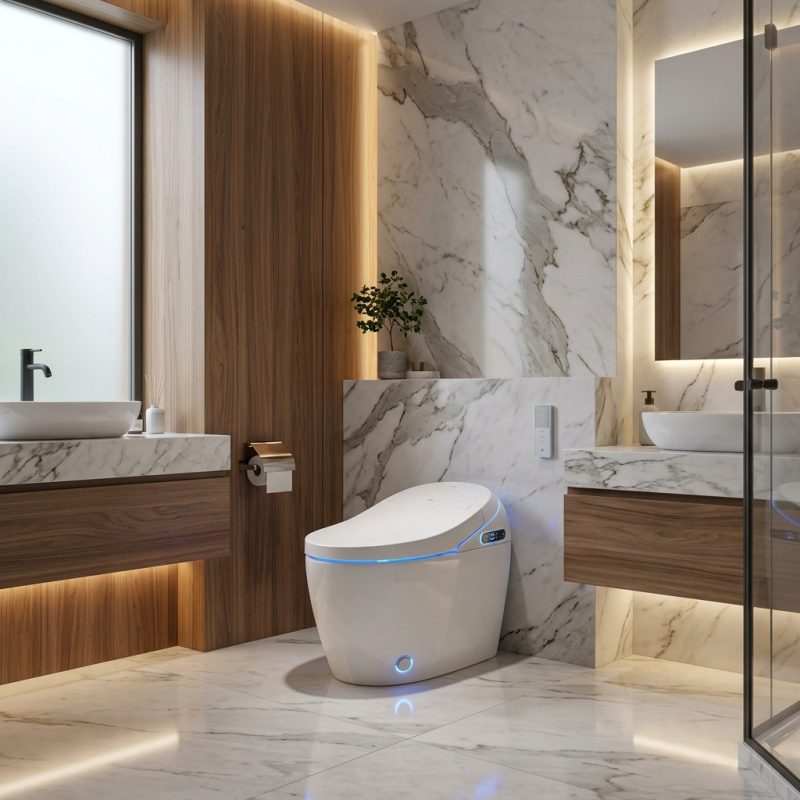
An all-in-one bidet—commonly marketed as a smart bidet toilet—combines a high-efficiency toilet and an advanced electronic cleansing system into a single unified porcelain fixture. Instead of bolting an aftermarket plastic bidet seat onto an existing bowl, the entire fixture is engineered from the ground up as a coordinated unit.
How All-in-One Smart Bidets Work
Smart toilets hide their plumbing lines, electronic controllers, high-pressure pump systems, and heating elements beneath a streamlined, skirted ceramic shell. Rather than relying on a bulky gravity-fed water tank on the wall, many smart toilets use direct tankless booster pumps or in-wall cisterns to deliver powerful cyclonic siphon flushes.
When you walk into the bathroom, motion sensors detect your presence and automatically lift the motorized lid. Once you sit down, an integrated deodorizer fan pulls air through a catalytic carbon filter. After using the toilet, you activate personalized wash profiles via a wall-mounted touchscreen remote or smartphone app.
When you stand up, the toilet automatically triggers a dual-flush cycle, rinses the motorized stainless wand with electrolyzed or UV-sterilized water, closes the lid, and powers down.
Key Features Exclusive to Smart Bidets
- Seamless architectural aesthetic: With zero visible external water hoses or dangling cords, smart toilets provide a modern, minimalist look.
- Automated touchless operation: Auto-open and auto-close lids, automatic foot-sensor flush triggers, and self-sanitizing bowl mists offer completely hands-free bathroom visits.
- Advanced flushing systems: Integrated pump-assisted flushes clean the bowl thoroughly using minimal water, meeting strict EPA WaterSense efficiency benchmarks.
- Nighttime convenience: Built-in ambient LED bowl nightlights illuminate the porcelain softly without blinding nighttime glare.
Considerations Before Buying
All-in-one smart toilets represent a premium investment, typically ranging from $800 to well over $4,500. Installation involves removing your old toilet completely and setting the new wax ring over the existing 12-inch rough-in floor flange. In addition, you must have a dedicated GFCI electrical outlet nearby to power the internal pumps and flash heaters.
Best For
Master bathroom remodels, high-end renovations, smart home enthusiasts, and homeowners who want clean lines and hands-free automated hygiene.
6. Portable Bidets: Hygiene On the Move
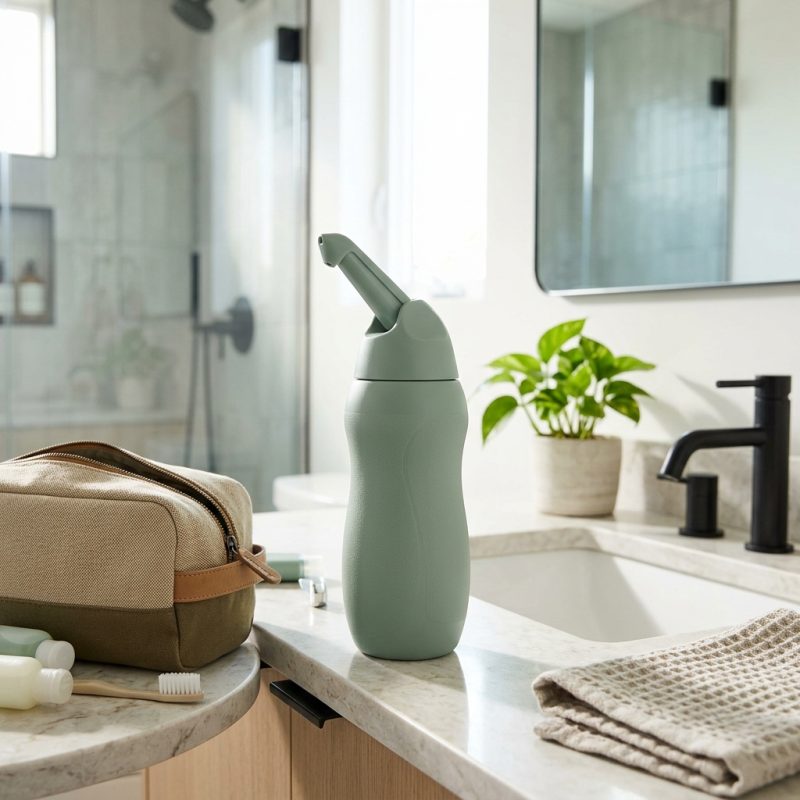
A portable bidet (often called a travel bidet or peri bottle) is a compact, self-contained washing device designed for use away from home. It requires zero plumbing connections, zero permanent installation, and packs easily into a handbag, backpack, or carry-on suitcase.
How Portable Bidets Work
Portable bidets come in two common styles:
- Manual Squeeze Bottles: Made of flexible, medical-grade EVA or silicone, these bottles feature an extended, angled wand with a cluster of spray apertures at the tip. You fill the bottle with clean tap water from the bathroom sink (hot, warm, or cold), screw on the nozzle cap, turn the bottle upside down, aim, and squeeze. An air release valve at the base allows continuous water flow without the bottle collapsing.
- Battery-Powered Electric Portables: These compact, cylindrical wands house a miniature electric pump and a water reservoir or universal bottle adapter. Powered by AAA batteries or an internal rechargeable USB battery, pressing a button delivers a steady, motorized stream at two pressure settings without hand pumping.
Key Pros and Cons of Portable Bidets
- The Good:
- Complete mobility: Clean up comfortably in public restrooms, hotels, office buildings, or while camping off-grid.
- Zero installation: No tools, no wrenches, and no landlord approval needed.
- Postpartum & medical care: Widely recommended for postpartum perineal recovery, surgical care, and soothing hemorrhoids while away from home.
- Low cost: Manual squeeze bottles cost $10 to $20; electric rechargeable models cost $25 to $35.
- The Trade-Offs:
- Limited capacity: Reservoirs typically hold between 300 ml and 500 ml (10 to 17 ounces) of water, which is enough for one thorough wash before needing a refill.
- Manual temperature mixing: You must fill the bottle with warm water at the sink beforehand if you want a warm rinse.
Best For
Frequent travelers, commuters, outdoor campers, postpartum recovery, and anyone who wants clean hygiene while away from home.
Installation and Electrical Safety Standards
When setting up any bidet style, keeping your home code-compliant prevents water damage and electrical hazards.
Electrical Outlets for Powered Seats
Electric bidet seats must be plugged into a nearby wall receptacle. Under National Electrical Code (NEC) Section 210.8 guidelines, all bathroom electrical outlets within reach of plumbing fixtures must feature Ground-Fault Circuit-Interrupter (GFCI) protection to eliminate shock risks. Furthermore, certified seats undergo safety testing under UL 1431 standards for personal hygiene appliances, and wireless controllers comply with FCC Part 15 regulations for low-power radio devices.
Bidet Seat vs. Attachment vs. Sprayer: How to Choose the Right Type
To pinpoint the right fixture without wasting money, match your choice to your housing situation, electrical setup, and budget:
1. Choose Based on Your Living Situation
- Renters: Avoid anything that requires cutting drywall, modifying floor drains, or leaving holes. Bidet attachments, non-electric seats, and tank-hung handheld sprayers use existing shutoff threads and unbolt completely without leaving marks or risking your security deposit.
- Homeowners: Replacing your primary toilet seat with an electric bidet seat or installing an integrated toilet adds permanent property value, elevates your daily comfort, and eliminates unsightly exposed hoses.
Choose Based on Electrical Access
- If there is no electrical outlet within 3 to 4 feet of your toilet, running an extension cord across the floor is unsafe and violates electrical building codes. Choose a mechanical attachment, a non-electric seat, or a handheld sprayer.
- If you have a GFCI-protected outlet near the bowl (or plan to hire an electrician to tap into your vanity circuit), an electric seat delivers warm water, heated seating, and hands-free drying.
3. Choose Based on Personal Physical Needs
- Arthritis & Mobility Limits: Twisting around to hold a handheld sprayer or manually reach a low dial can be painful for individuals with joint stiffness or chronic back pain. An electric bidet seat with a large-button wireless remote mounted right on the wall provides effortless push-button hygiene.
- Sensitive Skin & Hemorrhoids: Dry friction makes inflamed perineal tissue worse. Gentle aerated warm water from an electric seat cushions the wash and promotes pelvic muscle relaxation, whereas high-pressure cold manual sprays may feel harsh on tender skin.
Standalone Fixture vs. Integrated Smart Toilet
In modern luxury bathroom design, traditional standalone basins are increasingly being replaced by all-in-one integrated smart toilets.
An integrated smart toilet houses the ceramic bowl, high-efficiency automatic flushing system, and electronic bidet wand inside a single seamless porcelain skirt. It saves roughly half the bathroom footprint of a dual-fixture setup, requires only one drain line, and offers hands-free lid opening, automatic UV nozzle sanitizing, and remote-controlled cleansing.
Frequently Asked Questions
What kind of bidet is best?
For most homes, an electric bidet toilet seat is the best overall option.
It strikes an ideal balance between daily comfort, practical hygiene features, and straightforward installation. Unlike standalone ceramic basins, it mounts right onto your existing toilet bowl without taking up extra square footage or requiring professional plumbing rough-ins.
Unlike basic mechanical attachments, an electric seat gives you continuous warm water, adjustable nozzle positioning, a heated seat, and warm-air drying. It turns your existing toilet into an advanced personal care fixture at a fraction of the cost of a full bathroom renovation.
Can you get warm water with a handheld bidet sprayer?
Yes, but doing so requires installing a specialized dual-temperature thermostatic mixing valve.
A standard handheld sprayer taps exclusively into the cold water shutoff valve next to your toilet tank. To get warm water, you must install a mixing valve beneath your bathroom sink that draws from both your cold and hot supply lines. A flexible hot-water tube then runs from the sink vanity across to the sprayer on the toilet.
While effective, this setup has two caveats: you must wait a few seconds for the hot water to travel from your water heater to the sink, and the exposed supply tube running between your vanity and toilet can look cluttered if not carefully routed.
Are standalone bidets better than bidet toilet seats?
In terms of daily convenience, space efficiency, and modern features, no, standalone bidets are generally not better than bidet toilet seats.
While classic ceramic standalone basins offer architectural elegance in spacious European-style bathrooms, they carry several practical downsides:
- You have to get up from the toilet bowl and straddle a separate basin while still unwashed.
- They take up significant bathroom square footage that most modern layouts cannot spare.
- They do not offer heated seat rings, warm-air blowers, motorized nozzle oscillation, or wireless remote controls.
- They demand dedicated floor drains, hot-and-cold plumbing rough-ins, and high installation costs from a licensed plumber.
A bidet toilet seat cleans you while you remain comfortably seated in one place, performs the wash and dry cycle hands-free, and delivers superior features while using your existing toilet footprint.
Final Thoughts: Finding Your Best Fit
Upgrading to a bidet is an easy win for daily hygiene, but getting the best results starts with choosing the right types of bidets for your home.
If you are on a budget or renting, an attachment or handheld sprayer offers a quick, affordable upgrade. If you want maximum comfort and have an outlet nearby, an electric seat or smart toilet provides total luxury. Match the design to your space and enjoy cleaner, fresher hygiene every day.