When most people think of a bidet today, they picture high-tech heated seats or clip-on spray attachments. Yet, long before electronic models transformed bathroom routines, there was the original design: a dedicated, low-slung ceramic basin resting directly beside the toilet.
Understanding what is a standalone bidet means exploring the classic fixture that has anchored European and Latin American bathrooms for centuries. Here is a clear, straightforward breakdown of how a standalone bidet works, how to use it, and how it compares to modern bathroom alternatives.
What Is a Standalone Bidet?
A standalone bidet is an independent, non-electric porcelain bathroom fixture plumbed adjacent to the toilet. It resembles a low toilet bowl without a seat or lid, equipped with its own dedicated hot and cold water faucets, a pop-up drain, and an independent waste line.
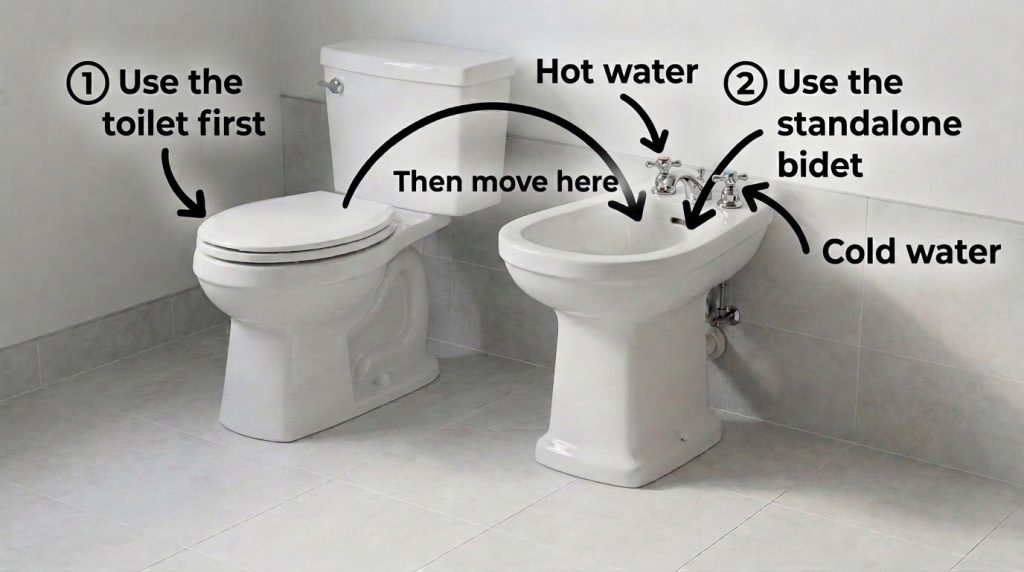
Unlike integrated attachments, a standalone bidet is not designed for waste disposal. You use the standard toilet first, then physically move over and sit or straddle the bidet basin to wash with fresh running water.
How Does a Standalone Bidet Work?
1. Dual-Fixture Architecture
The core concept is functional separation. The toilet exists solely to flush human waste, while the bidet serves as a specialized wash basin for personal hygiene. It requires dedicated floor space right next to the bowl so you can easily shift between the two fixtures.
2. Manual Water Blending
Unlike basic non-electric attachments that pull only cold water from the toilet supply, a standalone bidet plumbs into both hot and cold municipal water lines. Using standard mixer handles or dual knobs, you manually adjust the flow to achieve a soothing, comfortable temperature before washing.
3. Spray Types
Standalone bidets typically deliver water in one of two configurations:
- Over-the-Rim Faucet: A mixer spout directs a smooth, downward stream into the basin, functioning much like a low-mounted sink.
- Vertical Spray Jet: An integrated nozzle in the center of the porcelain bowl fires an upward vertical jet of water directly toward the user when activated.
4. Direct Drainage
Some people might be asking if the water that comes out of it is clean? Well, yes. The water flowing into a standalone bidet is fresh, potable drinking tap water. Once used, it exits through a standard pop-up drain stopper connected to an independent P-trap beneath the floor, exactly like a bathroom sink. In fact, it complies with established ASME A112.19.2 ceramic plumbing fixture standards.
How to Use a Standalone Bidet Correctly
If you have never encountered one, figuring out how to use a standalone bidet can feel unfamiliar. The process is simple once you know the basics:
- Use the Toilet First: Relieve yourself in the standard toilet. Many people wonder, do you wipe before using a bidet? Well yes, you should wipe first, when using a standalone bidet, giving a quick preliminary wipe with toilet paper removes bulk matter, ensuring the bidet basin remains clean.
- Move to the Bidet: Straddle the porcelain basin. You can face the water controls (the traditional method, which makes adjusting temperature and spray easier) or face away toward the room (like a normal toilet).
- Adjust the Temperature: Turn on the water handles slowly, testing the temperature with your hand before directing the flow to sensitive skin.
- Cleanse: Use the flowing water stream—along with a splash of water and your hand—to rinse clean. Some individuals prefer using a mild cleanser, while some people still ask if using soap is good with a bidet. You can use a soap; a drop of mild, pH-balanced liquid soap is common practice for standalone bidet washing.
- Dry Off: Stand up and dry yourself thoroughly with a bidet towel that is mostly hanging on a bidet towel hanger or humper. And follow proper bidet towel etiquette.
For some women this type of bidet may seems less sanitary, but it’s not. It’s best to follow proper hygiene guidelines on how a woman should use a bidet which incudes rinsing strictly front-to-back to prevent colon bacteria from reaching the urethra.
Standalone Bidet vs. Bidet Toilet Seat: Which Is Better?
When planning a bathroom upgrade, most homeowners debate between a traditional basin and modern alternatives.
| Feature | Standalone Porcelain Bidet | Bidet Toilet Seat |
| Space Required | 15–18 inches of dedicated floor space | Zero extra space (uses existing toilet) |
| Installation Complexity | Requires rough-in plumbing and drain lines | 20-minute DIY screw-on setup |
| Typical Total Cost | $800 – $2,500+ (fixture + labor) | $60 – $650 |
| Power Needs | Unpowered (manual water valves) | Standard 120V GFCI outlet (electric) |
| Drying Method | Manual cloth bidet towel or paper | Built-in warm-air dryer fan |
| Moving Fixtures | Must stand up and switch basins | Wash and dry in one single spot |
While a standalone bidet provides a classic, timeless aesthetic, a bidet toilet seat provides automated luxury — including heated seats, oscillating wands, and warm-air drying — without sacrificing square footage.
Plumbing and Installation Requirements
Installing a standalone bidet Bidet Etiquette: The Ultimate Guide is a major plumbing project, not a quick DIY task. It requires the same infrastructure as installing a second toilet or low pedestal sink:
- Rough-In Floor Drain: A dedicated 1-1/4″ or 1-1/2″ drain pipe must be cut and routed through the subfloor to tie into the home’s main waste stack.
- Twin Water Supply Lines: Unlike standard toilets that need only one cold line, a standalone unit requires dedicated 1/2-inch hot and cold supply pipes stubbed out from the wall.
- Backflow Prevention: To protect clean tap water from contamination, fixtures with vertical upward spray jets must incorporate an atmospheric vacuum breaker complying with IAPMO backflow prevention standards.
- Clearance Requirements: Under standard building and plumbing codes, a standalone bidet requires at least 15 inches of clearance from its center to any side wall or fixture, along with 21 to 24 inches of clear space in front of the basin.
Reviewing the overall cost of installing a bidet in the UK or US shows that professional plumbing, floor tiling, and pipe rough-ins typically run between $800 and $2,500+, depending on subfloor accessibility.
Do People Still Install Standalone Bidets in Modern Homes?
While electric bidet seats and all-in-one smart toilets dominate modern bathroom upgrades, people do still install standalone bidets in today’s homes. Though it has largely shifted from a standard plumbing fixture to a deliberate luxury statement.
Homeowners building custom primary suites or undertaking high-end European-style renovations frequently choose standalone ceramic basins for their classic, timeless aesthetic. In countries like Italy, Portugal, and Argentina, standalone bidets remain common practice and are often mandated by local building codes. In North America and the UK, they appeal to design purists who want a dedicated washing station without visible electrical cords, motorized parts, or electronic clutter next to the toilet.
However, widespread installation in standard modern builds is rare. A standalone bidet requires significant square footage, demanding at least 15 inches of side clearance, along with dedicated rough-in hot and cold supply lines and an independent subfloor waste pipe. For most homeowners balancing limited bathroom space and renovation budgets, smart bidet seats and sprayers offer identical hygiene benefits, warm-air drying, and heated seats on the toilet’s existing footprint at a fraction of the plumbing cost.
Standalone models endure, but primarily as a bespoke architectural choice in spacious, luxury bathrooms.
Frequently Asked Questions
Can you poop in a standalone bidet?
No. A standalone bidet is not a toilet. Its drain pipe is typically 1-1/4 to 1-1/2 inches in diameter — the same size as a bathroom sink drain — compared to a toilet’s 3- to 4-inch waste line. Flushing solid waste into a standalone bidet will cause severe plumbing clogs. Always use the toilet first.
Do you face the wall or the room when using a standalone bidet?
You can sit either way. Traditionally, users straddle the basin facing the wall so they can easily reach and adjust the hot and cold water knobs. However, facing away from the wall (like sitting on a standard toilet) is equally common and often more comfortable when wearing pants.
Do standalone bidets need electricity?
No. Standalone bidets operate purely mechanically through home water line pressure and standard plumbing faucets. They do not require electrical wiring, batteries, or GFCI outlets.
Why are standalone bidets common in Europe but rare in the US?
In countries like Italy and Portugal, standalone bidets are legally mandated in homes with full bathrooms by building hygiene codes enacted in the mid-20th century. In North America, smaller average bathroom sizes, cultural unfamiliarity, and the high cost of running dual supply and drain pipes made them uncommon. Today, American homeowners increasingly favor add-on bidet seats over standalone ceramic fixtures.
A standalone bidet remains the classic gold standard of bathroom luxury for those with the floor space and plumbing budget to support it. By providing separate, dedicated fixtures for waste disposal and washing, it delivers unmatched hygiene and comfortable temperature control while reducing paper waste.
Final Thoughts
Understanding what is a standalone bidet reveals why this classic fixture remains the gold standard of luxury bathroom design. While modern seats offer space-saving convenience, a dedicated ceramic basin provides unmatched durability, independent plumbing, and classic elegance.
If you have the square footage and renovation budget to accommodate separate fixtures, installing a traditional bidet adds timeless aesthetic value and gentle, fresh-water cleanliness to your everyday hygiene routine.