You switched to a bidet to feel cleaner, and now the skin is itchy, red or stinging. It is a fair worry, and it is one of the most common questions new users ask: can a bidet irritate your skin?
It can, but the bidet itself is rarely the culprit. Irritation almost always comes from how it is used: pressure that is too strong, water that is too hot or cold, rinses that go on too long, scented products or skin that stays damp. This guide explains the causes, how to tell simple irritation from something that needs a doctor, and how to fix each problem. If you are still weighing between using a bidet compares to toilet paper then you should consider looking at their pros and cons.
Can a Bidet Irritate Your Skin?
Yes, it can, but the cause is almost always the settings or habits rather than the bidet. The usual triggers are high pressure, water that is too hot or cold, washing too long, scented soaps or wipes, and not drying afterwards.
Lowering the pressure, using lukewarm water, keeping rinses short and patting dry fixes most cases within days.

Why Skin Around the Bottom Is So Easily Irritated
Thin, Sensitive Skin
The skin around the anus and genitals is thinner and more delicate than skin on most of the body. It reacts quickly to friction, heat and chemicals, and it is in contact with stool, sweat and moisture all day.
How Irritation Happens
The NHS explains that irritant contact dermatitis is the most common kind of contact reaction. It happens when a substance directly harms the outer layer of the skin, and the usual culprits include soaps, detergents and frequent contact with water. That last point matters here. A bidet puts water on skin that is already prone to dryness, so a rinse that is too long, too frequent or followed by dampness can wear down the skin’s protective barrier.
This is why a bidet can feel wonderful one week and sore the next. Nothing about the device changed, but a stronger setting, a new soap or a rushed pat dry might have.
The Most Common Reasons a Bidet Irritates Skin
If you are asking whether a bidet can irritate your skin, one of these six causes is almost always the answer.
Water Pressure That Is Too Strong
A hard jet feels like scrubbing, and skin that is scrubbed gets red and sore. Colorectal specialists generally advise starting at the lowest setting and raising it only if needed. A strong stream is also the setting most likely to turn a mild problem into a painful one, so in this settings, bidet is not actually that harmful, especially when used with wider cautions.
Water That Is Too Hot or Too Cold
Hot water can damage delicate skin, and a cold blast makes you tense and can feel harsh. Lukewarm is the target. If your supply runs cold, there are ways to make your bidet cold water to become warm or comfortable.
Washing Too Long or Too Often
The NHS lists frequent contact with water among the common causes of irritant dermatitis. One short rinse of roughly 15 to 30 seconds after each bowel movement is enough. Extra washes between toilet visits add nothing and can leave the skin dry and itchy.
Not Drying Properly
Moisture left on the skin causes chafing and itching, and it keeps the area damp inside your underwear. Press the area dry with a soft bidet towel or soft paper, and don’t rub. Whether you’re using a bidet towel to dry off or using an air-dryer, there are correct ways to properly dry off after using a bidet.
Soap, Wipes and Scented Products
Soaps and detergents are the first examples of irritants, and fragrance and alcohol in wipes and washes can add to it. Plain water is usually enough. If you use soap, choose a mild, fragrance-free one on the outer skin only, and rinse it off. Even when using a bidet, use a soap with it.
Scale and residue on a nozzle are not what you want sprayed onto sensitive skin. Clean it regularly, also merely wiping your nozzle with a cloth or splashing water on it is not enough. There are simple yet detailed ways to clean a nozzle to prevent germs transfer. Be cautious with shared bidets until you can clean the nozzle first.
Is It Irritation, an Allergy or Something Else?
Signs of Simple Irritation
According to the NHS, irritant reactions can start right after exposure or within 48 hours, with dryness, redness, burning or stinging. If it settles within a few days of changing your settings or products, it was probably simple irritation.
Signs of Contact Dermatitis or an Allergy
An allergic reaction to an ingredient, such as a fragrance in a wash or wipe, tends to bring redness and itching that can progress to cracked, fluid-filled and very itchy skin. If it flares each time you use one product, stop that product.
Conditions That Mimic Bidet Irritation
Sometimes the bidet is blameless. Hemorrhoids and fissures can cause itching and pain, and yeast infections and other conditions can cause redness and burning. If your symptoms match, read our detailed article on bidets and hemorrhoids and bidets and yeast infections to understand the relationship between them or if bidet promotes them.
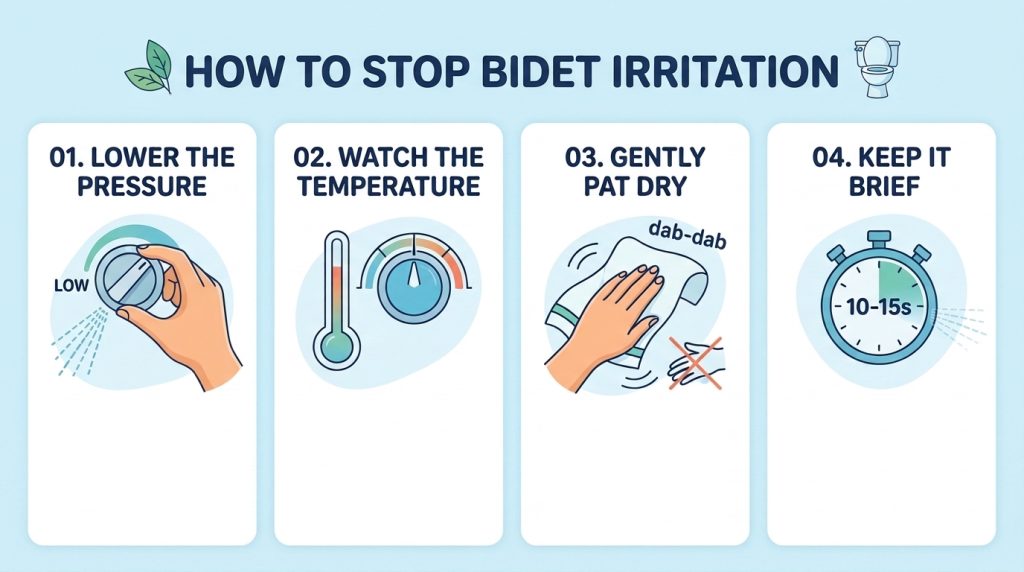
How to Stop Bidet Irritation, Step by Step
- Lower the pressure and use lukewarm water. Start at the lowest setting and test on your hand.
- Keep each rinse short. About 15 to 30 seconds after each bowel movement is enough.
- Use plain water. If you want soap, choose a mild, fragrance-free one, apply it to the outer skin only and rinse it off.
- Pat dry, don’t rub. Press with a soft towel or soft paper, or let the area air dry for a minute.
- Clean the nozzle regularly. Wipe it and descale it as needed.
- Switch products one at a time. If a new soap, wipe or wash coincided with the problem, drop it first.
If the Skin Is Already Raw
Give it a rest. Stop the bidet for a few days, rinse gently with lukewarm water, and keep the area dry. Its’s best to avoid the trigger as the best prevention. Rinse with warm water if you can’t avoid it, and moisturise often with an emollient. A pharmacist can recommend an emollient or other treatment if the symptoms are bothersome.
When the skin has calmed, return to the bidet at lower pressure and a shorter rinse than before, and build up only if you need to.
Who Is More Likely to Get Irritated?
Some people need extra care, because their skin is thinner, drier or already damaged:
- people with eczema or very dry, sensitive skin;
- anyone with hemorrhoids or fissures, since the skin may already be broken;
- people recovering from childbirth or surgery;
- anyone with diarrhea, which means more frequent cleaning;
- people who shave or wax the area.
If this is you, use the lowest pressure, lukewarm water and a very short rinse. In general, anyone can use a bidet; both man and woman. Also bidet are likewise sanitary to females in general.
When to See a Doctor
See a doctor if:
- symptoms are persistent, recurrent or severe, which is the NHS threshold for contact dermatitis.
- the skin has blisters, open sores, swelling or a spreading rash.
- you notice signs of infection: rapidly worsening symptoms, discharge, increasing pain, or feeling generally unwell, hot or shivery.
- there is bleeding or you can’t tell what is causing the problem.
Get medical advice quickly for a suspected skin infection, as antibiotics may be needed.
Frequently Asked Questions
Can a bidet cause itching?
Yes, usually through high pressure, scented products, over-washing or leftover moisture. Reduce the pressure, use plain water and dry properly. Persistent itching can also come from other causes, so see a doctor if it continues.
Can a bidet cause a rash?
A bidet can contribute to one through irritation or an allergic reaction to a soap, wash or wipe. A rash that blisters, spreads or doesn’t improve needs medical advice.
Is it normal for a bidet to burn?
A brief sting on broken or raw skin can happen, but ongoing burning is a sign to lower the pressure, cool the water and stop for a few days. Burning that continues needs a check.
Should I stop using my bidet if my skin is irritated?
Pause it for a few days if the skin is raw, then restart with gentler settings. Use soft paper to pat dry in the meantime.
Is a bidet gentler than toilet paper?
Often, because water avoids friction, but only when pressure, temperature and drying are right. Aside from just saying yes, we have also compared using a toilet paper vs a bidet, to help you understand which one has a greater advantage.
Final Thoughts
Can a bidet irritate your skin? Yes, but in most cases the fix is in your hands: lower pressure, lukewarm water, a short rinse, plain water and a gentle pat dry. If the skin doesn’t settle, or you see blistering, open sores or signs of infection, see a doctor rather than guessing.