Passing a bowel movement with a torn anodermal lining can feel like razor blades, turning everyday bathroom visits into a source of dread. An anal fissure turns the most routine part of the day into something you dread. Every wipe stings, and a hard pass of toilet paper can reopen a tear that was just starting to close. That is why so many people with a fissure start asking about bidets and anal fissures and if washing with water is really kinder than wiping.
For most people it is, as long as the bidet is used gently. Water cleans without the dragging friction of paper, but a bidet is a hygiene tool, not a treatment, and the wrong settings can irritate a tear.
This guide covers how to use a bidet with a fissure, how to keep the whole routine clean, and when it is time to see a doctor.
Bidets and Anal Fissures
A bidet is specialized and designed to cleanse the perianal area using a targeted stream of water instead of dry paper. An anal fissure is a small, painful tear in the delicate mucosal lining of the lower anal canal, often triggered by passing hard stools and exacerbated by intense sphincter spasms.
The clinical relationship between bidets and anal fissures centers on friction elimination and muscular relaxation. Wiping an active tear with dry paper creates mechanical shearing that continuously reopens the wound and stalls recovery.
A gentle warm-water bidet wash cleanses the area thoroughly without touch, preventing chemical irritation from paper dyes. Furthermore, warm hydrotherapy helps lower elevated resting anal sphincter pressure, improving microvascular blood flow to the anodermal tissue so the fissure can finally heal.
Can You Use a Bidet With an Anal Fissure?
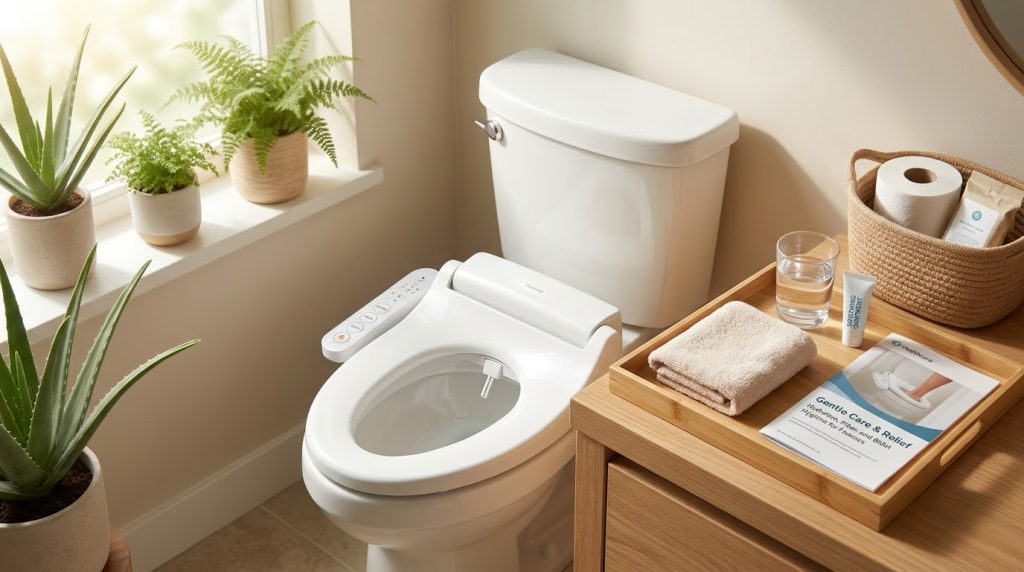
Yes, in most cases. A gentle rinse with lukewarm water at low pressure is usually kinder to a fissure than wiping, because it cleans without friction. A bidet will not heal the tear, and high pressure or hot water can make the pain worse.
Aim from a short distance, keep the rinse to about 15 to 30 seconds, and pat dry rather than rub. If it stings or bleeds more, stop and check with your doctor.
What Is an Anal Fissure and Why Hygiene Matters
What a Fissure Is
An anal fissure is a small tear in the thin, moist lining of the lower rectum near the anus, according to MedlinePlus. It is almost always in the middle, and it can appear suddenly or develop gradually.
Common Causes
In adults the usual cause is passing a large, hard stool or having long-lasting diarrhea. Other contributors are reduced blood flow to the area, excess tension in the anal sphincter muscles, childbirth and Crohn disease. Fissures affect men and women equally.
Symptoms
The classic signs are sharp pain during bowel movements and bright blood on the stool or the toilet paper. Pain can linger afterwards, and some people start avoiding the toilet. That backfires, because holding stool in makes it harder and can worsen the tear.
Why Cleaning Is Tricky
A fissure is a small open wound in a place that meets stool several times a day. Leftover stool and moisture can irritate it, yet rough wiping can reopen it. Good hygiene means getting clean without friction and then staying dry, which is exactly what a bidet is designed to help with. Most fissures heal on their own, and people who have had one are more likely to get another, so a gentle routine is worth building.
How Bidets Help With Anal Fissures
The appeal of bidets and anal fissures together is simple: the tear needs to stay clean and be left alone. Water does the first without breaking the second.
Cleaning Without Friction
Paper drags across the skin. Water lifts residue away. On a tear that is already open, removing that drag is the single biggest benefit, and it is why you may find you need far less wiping.
Less Pain During Cleanup
When every touch hurts, cutting the number of passes cuts the pain. A bidet lets you stay seated, rinse in seconds and skip the awkward scrubbing.
Warm Water and Muscle Tension
Tension in the anal sphincter is one factor behind fissures, and warm water is the idea behind sitz baths. In a study of healthy volunteers published in the Journal of Korean Medical Science, low or medium warm water pressure lowered anal canal pressure about as well as a sitz bath, as summarised by Los Angeles Colon and Rectal Surgical Associates. That was in healthy people, not people with fissures, so it shows a plausible benefit rather than proof of healing.
Bidet vs Toilet Paper for Anal Fissures
If your skin is tender, flow beats friction. You can still use a few squares of soft paper or a clean towel to pat dry. Whichever you choose, the bigger levers for healing are soft stools, enough fiber and fluids, and not straining.
Can a Bidet Make an Anal Fissure Worse?
A bidet does not cause fissures. Hard stools and straining do. But a badly used one can slow healing.
Pressure Set Too High
A strong jet on an open tear is painful and can irritate it further. The colorectal practice cited above advises starting low and raising the pressure only if needed.
Water That Is Too Hot or Too Cold
Hot water can harm delicate skin, and a cold blast makes the muscles tense, which is the opposite of what you want. Aim for lukewarm. If your bidet happens to supply you with chilly water, there are ways you can turn your bidet cold water to warm water.
Overwashing and Staying Damp
Repeated rinses can dry the skin, and lingering moisture irritates it. Keep each rinse short and dry the area afterwards. One rinse after each bowel movement is enough.
Dirty Nozzles and Scented Products
Broken skin deserves a clean nozzle. Do not include fragranced soaps or wipes as they adds irritation.
How to Use a Bidet Safely With an Anal Fissure, Step by Step
Using a bidet with an anal fissure works best as a short, calm routine.
- Set the water first. Choose lukewarm water and the lowest pressure.
- Don’t strain or linger. Finish your bowel movement without pushing, and don’t sit longer than needed.
- Aim from a short distance. Let the stream run over the area for 15 to 30 seconds. Don’t rub with your fingers.
- Increase pressure only if necessary, and never to the point of stinging.
- Pat dry gently. Press with a soft towel or soft paper and don’t drag. Leftover moisture irritates, so see dry up properly and maintain a proper bidet towel etiquette.
- Skip scented soap. Water is usually enough. If you want soap, use a mild, fragrance-free one, and rinse it off fully. Although most people might be skeptical about using a bidet with a soap, there’s mostly no harm in it if used correctly.
Habits That Help Fissures Heal
The bidet only deals with cleaning. Healing depends on softer stools. MedlinePlus advises more fiber, more fluids and, where needed, stool softeners, and it’s also best not to hold in the urge to go. Avoiding the toilet because of pain makes stools harder and can worsen the fissure.
What to Do If the Bidet Stings
Water touching exposed tissue can sting, especially in the first few uses. Lower the pressure, move the nozzle a little farther away, and check that the water isn’t too warm. If the sting stays sharp, or you see more blood than usual, pause the bidet for a day or two and ask your clinician.
If the bidet adds pain, bleeding or burning, stop using it and check with a clinician. A gentle alternative is a warm, shallow bath after bowel movements, which mostly eases pain.
Bidet Hygiene When You Have a Fissure
A healthy anus is tolerant of the odd germ. A fissure is an open wound, so cleanliness matters more.
Keep the Nozzle Clean
Wipe the nozzle regularly and descale it if you see buildup. Our guide on how to clean a bidet nozzle properly shows how bidet hygiene is important and prevent cross contamination.
Use Clean Towels or Disposable Paper
A damp, reused towel is a poor thing to press on a tear. Use a fresh towel each time or a few squares of soft paper. And as a guest, never share a bidet towel.
In a shared bathroom, use the bidet only if you can clean the nozzle first, or choose paper and a warm bath until the tear closes. Wash your hands before and after the toilet either way.
Bidet vs Sitz Bath for Anal Fissures
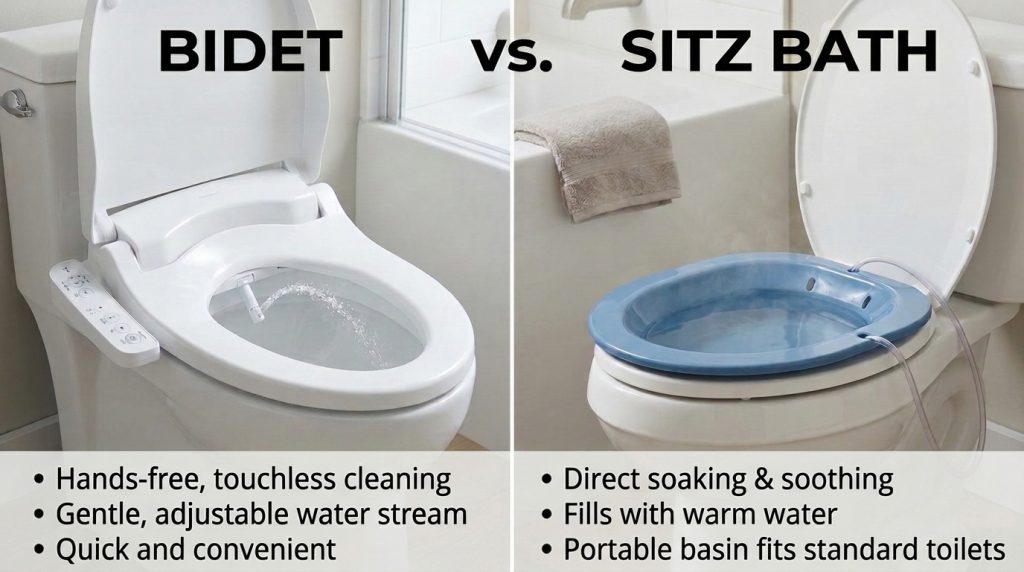
These two do different jobs. A sitz bath soothes: it’s mostly when one sits in warm water that covers only the hips and buttocks, 2 to 3 times a day for 10 to 15 minutes. A bidet cleans, in seconds, right after you use the toilet.
Most people do best using both, with the bidet after each bowel movement and a sitz bath when the area is sore. If you cannot soak, a bidet rinse is the practical choice. If the area is raw and a soak feels better than a jet, take the soak.
When to See a Doctor
Most fissures heal on their own, but don’t wait it out if:
- there is no improvement after 7 days of self-care, or symptoms are getting worse, as the NHS advises;
- you keep getting fissures, since procedures may be recommended for recurrences;
- you see any rectal bleeding you haven’t had checked, because it can signal other conditions;
- the pain is severe or you are unsure what is causing it.
If self-care fails, treatment can include prescription creams applied for up to 8 weeks, an injection to relax the anal muscle or a small procedure to reduce muscle tension, per the NHS. A bidet fits alongside any of these, but ask your clinician first after a procedure.
Frequently Asked Questions
Does a bidet help heal an anal fissure?
Indirectly, it keeps the area clean with less friction, which avoids reopening the tear. Healing itself comes from soft stools, enough fiber and fluids, and time.
Is a bidet better than wet wipes for an anal fissure?
Usually, plain water has nothing in it to sting, while many wipes contain fragrance, alcohol or preservatives. If you use wipes when away from home, choose fragrance-free ones.
Can a bidet cause an anal fissure?
Not by itself. Fissures come mainly from hard stools, diarrhea and straining. A very strong jet could irritate skin that is already sore, which is why low pressure matters.
How long does an anal fissure take to heal?
Most heal on their own, but neither MedlinePlus nor the NHS gives a fixed time. The NHS says to see a GP if there is no improvement after 7 days of self-care, and healing creams may be needed for up to 8 weeks.
Can I use a bidet after childbirth if I have a fissure?
Childbirth is a recognised cause of fissures, and many women find water kinder than wiping. Use lukewarm water at low pressure, pat dry and follow your midwife’s or doctor’s advice.
Final Thoughts
Bidets and anal fissures can work well together when the bidet is set gently. Lukewarm water, low pressure and a soft pat dry clean the area without the friction that reopens a tear. It is a hygiene aid, not a cure, so keep stools soft, don’t strain, and see a doctor if there is no improvement after a week of self-care or if you notice bleeding.