Periods are messy enough without wondering whether your bathroom habits are making things worse. If you have a bidet, you have probably asked yourself whether it is a good idea to use it while you are bleeding, or whether you should stick with toilet paper until it is over.
Here is the short version. Using a bidet during your period is safe for most people, and many find it more comfortable than wiping, as long as you keep the water on the outside, gentle and lukewarm. The mistakes that cause trouble are spraying inside the vagina, using scented products and leaving the area damp.
This guide shows exactly how to do it with pads, tampons, cups and period underwear, and which habits to avoid, so you can use a bidet without second-guessing it.
Is Using a Bidet During Your Period Safe?
Yes. Using a bidet during your period is safe and often more comfortable than wiping, provided you rinse only the outside, use lukewarm water at low pressure and dry the area afterwards.
The one firm rule is never to aim the water inside the vagina. The CDC says the vagina is self-cleaning and that washing inside it can disrupt its pH and may lead to infections such as yeast infections or bacterial vaginosis. A bidet used externally is a different thing.
Can You Use a Bidet on Your Period? Benefits and Limits
Using a bidet during your period has real comfort advantages, and a few limits worth knowing about.
Why Many People Find It More Comfortable
Dried blood and a sticky pad can leave the skin tender. Water rinses it away without rubbing, so there is no tugging at sensitive skin or tearing of damp toilet paper. If you also have cramps or a heavy flow, skipping the repeated wiping is a relief.
Feeling Fresher
A quick rinse can leave you feeling cleaner between changes, which matters most when you are out of the house or sleeping. It also helps reduce the irritation that rough wiping and long wear can cause, and our guide to whether bidets are sanitary for women goes deeper on that side.
What a Bidet Won’t Do
A bidet does not replace changing your pad, tampon or cup on schedule. Also health wise, it’s best to change a tampon every 4 to 8 hours and never to wear one for more than 8 hours, and to change pads every few hours. A bidet also won’t treat odor, itching or an infection. Those are reasons to see a doctor, not to wash more often.
The benefit, in other words, is gentler cleaning. Everything else about period care stays the same.
How to Use a Bidet During Your Period, Step by Step
- Wash your hands first. The CDC advises washing before and after using the restroom and before and after handling a period product.
- Remove or change your product as needed. Take out the pad or tampon, or empty the cup, before you rinse.
- Set lukewarm water and low pressure. Hot water and a hard jet are the two settings most likely to irritate.
- Rinse the outside only. Aim at the outer genital area, not inside the vagina, and keep it to about 15 to 30 seconds.
- Pat dry. Use a clean towel or soft paper and press, don’t rub. Damp skin under a fresh pad invites chafing, and there are ways to dry off after using a bidet if you don’t like the towel option.
- Put on a fresh product. Only once the skin is dry.
Which Nozzle to Use
If your bidet has two nozzles, use the front or feminine one for the vulva and the rear one for the bowels, and rinse front first, rear last, so bacteria are not carried forward. We explain there is a different between a rear and front nozzle that makes cleaning easy.
What About Soap?
Plain water is usually enough. It’s best to rinse the vulva with water alone, and to avoid scented products. If you still want soap, using a bidet with soap is .
Using a Bidet With Pads, Tampons, Cups and Period Underwear
Pads
Rinse before you put on a new pad, then dry the area well so the adhesive doesn’t stick to damp skin and the pad doesn’t chafe. Change pads every few hours, as the CDC advises, and wrap used ones in tissue and bin them rather than flushing.
Tampons
A rinse of the outer area is fine while a tampon is in, but don’t point the stream at the string or aim it inside. Water pressure isn’t the issue so much as habit: a bidet can make a tampon feel cleaner, but it should never stretch the time you leave one in. Change it every 4 to 8 hours, use the lowest absorbency you need, and watch for fever, vomiting, diarrhea or a sunburn-like rash, which are warning signs of toxic shock syndrome, according to the American Academy of Pediatrics.
Menstrual Cups and Discs
Wash your hands, remove and empty the cup into the toilet, then rinse the outside of your body with the bidet. Wash the cup itself with water at the sink. The CDC says to clean it after every use and, once your period ends, to rinse it and boil it for 1 to 2 minutes. Never use the bidet to flush water into the vagina.
Period Underwear
Rinse, then dry before dressing. Most reusable pairs are machine washable, so follow the product’s instructions.
Overnight and Heavy Days
Heavy days and nights call for a little planning. Rinse just before bed, dry well and put on a fresh product. The American Academy of Pediatrics notes that some people may need a pad overnight instead of a tampon, since a tampon should never stay in for more than 8 hours. On heavy days, keep your rinses short and your changes frequent, and keep a small towel or soft paper within reach so you can pat dry without getting up. If you need to change much more often than usual, talk to a doctor.
Is It Safe? Infection, pH and Hygiene Concerns
Can a Bidet Cause an Infection on Your Period?
There is no solid evidence that external bidet use causes infections. The risks come from misuse: spraying inside, scented products, a dirty nozzle or staying damp. Our look at what the evidence says about bidets and UTIs and whether bidets cause yeast infections both reach the same conclusion, and both flag period-friendly habits.
The Vagina Cleans Itself
The CDC is clear that you should not wash inside the vagina, because it is self-cleaning and internal washing can disrupt its pH. That is also the line between rinsing with bidet and douching. A bidet aimed at the outside leaves the vagina alone, while douching is not.
Keep the Nozzle Clean
Period blood and bacteria can end up on a nozzle, so wipe it regularly and descale it when needed. For best hygiene purpose do a deep cleaning on the nozzle. And also a bidet needs proper hygiene that is more broad, to prevent contamination. If you share a bathroom, clean the nozzle after your own use during your period.
Mistakes to Avoid When Using a Bidet on Your Period
Most problems come from a handful of habits:
- Spraying inside the vagina. It disrupts the natural balance and is the one thing to avoid completely.
- Using hot water or high pressure. Both irritate tender skin that may already be sensitive during your period.
- Using scented soap or wash. The CDC advises unscented products only.
- Skipping the dry-off. A damp area under a pad invites chafing and irritation.
- Rinsing instead of changing. A rinse doesn’t replace a fresh pad or tampon on schedule.
- Washing too often. One short rinse per toilet visit is plenty.
If you are not sure how your own bidet is set, there are specific best bidets that are suitable for women, which has all the features that make gentle settings easy.
Bidet vs Toilet Paper During Your Period
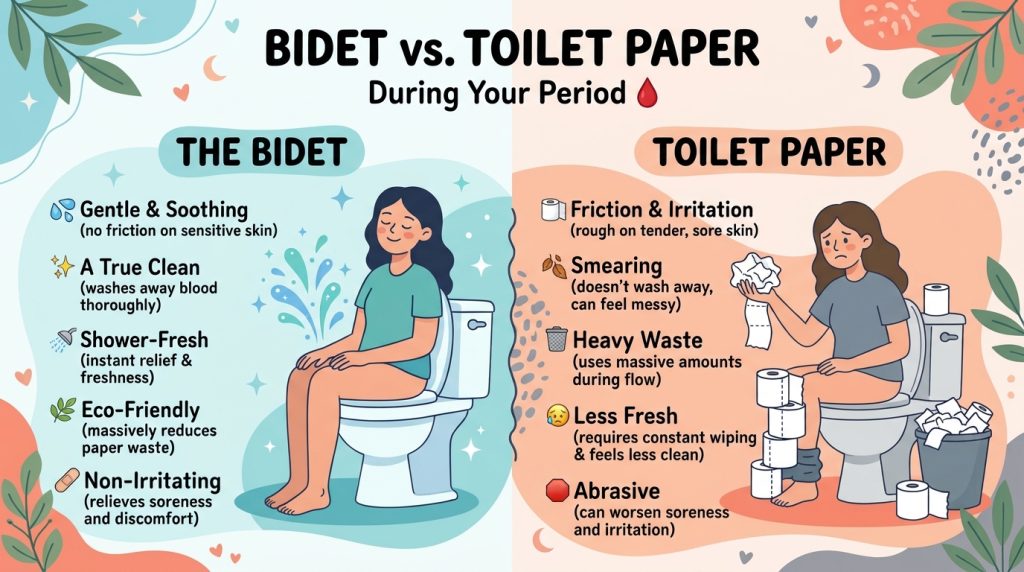
Paper wipes and rubs, and on skin that is already tender, a pad that has been on for hours can make that worse. Water cleans without friction, which is why many people prefer it on heavier days. You can still use soft paper to pat dry afterwards. There is a core differences between a bidet and toilet paper and it’s well known. However, the short answer for your period is that water is usually gentler, as long as the settings are gentle too.
When to See a Doctor
Talk to a doctor if you notice a change in vaginal odor, extreme or unusual pain, or periods that are heavier or longer than usual, as the CDC advises. Also get help if you have itching, burning when you pass urine or a discharge that is new for you.
If you are using tampons and develop a fever or chills, vomiting or diarrhea, a headache, a sunburn-like rash, or confusion and unusual tiredness, contact a doctor right away. These are the warning signs of toxic shock syndrome, which is rare but serious.
Frequently Asked Questions
Can I use a bidet while wearing a tampon?
Yes. Rinse the outer area only, and keep the stream away from the string and the vaginal opening. A bidet doesn’t change how often a tampon should be changed, which is every 4 to 8 hours.
Can a bidet wash out period blood?
It rinses blood from the skin, not from inside you, and it should not be used to flush the vagina. Menstrual flow leaves the body on its own.
Can bidet water get inside the vagina?
A gentle external rinse is not meant to. Water can enter if you aim directly at the opening or use high pressure, which is why low pressure and an angled, external aim matter. And a good reminder a bidet is the same as douching their differences is clear.
Is a bidet better than wet wipes on your period?
Usually. Plain water has nothing to sting, while many wipes contain fragrance, and the CDC advises unscented products.
Can I use a bidet with cramps or heavy flow?
Yes, and many find it easier than wiping. Stay seated, rinse briefly, pat dry and change your product on schedule. If your flow is heavier than normal, speak to a doctor.
Final Thoughts
Using a bidet during your period is safe and often more comfortable when you keep it external, lukewarm, gentle and short, and dry the area before putting on a fresh product. Don’t spray inside, don’t skip changing on schedule, and see a doctor if odor, pain, flow or symptoms change.