
After an operation, something as ordinary as going to the toilet can become hard work. You may be told not to bend, twist or strain, your stitches may be sore, and wiping may be painful or simply impossible to do properly. That is why so many people ask about using a bidet after surgery.
Often it can help. A bidet cleans with water, so you reach and rub less, which is gentler on a healing body. But it isn’t right for every operation, and the wrong settings can irritate a wound or break an instruction from your surgeon.
This guide explains when a bidet helps, how it fits different types of surgery, when to wait or ask first, and the exact settings and habits that keep it safe.
Is Using a Bidet After Surgery good?
Often, yes. A bidet can be easier and gentler than wiping, especially if you can’t bend or twist, as long as you use lukewarm water at low pressure and aim away from any wound.
The answer depends on the operation. Ask your surgeon first after rectal, anal, pelvic or abdominal surgery, or if you have stitches, drains, a catheter or a stoma, and follow any instruction to keep the area dry.
Why a Bidet Can Help During Recovery
Using a bidet after surgery solves a handful of real problems.
Less Bending, Twisting and Reaching
Hip replacement leaflets from the NHS tell patients to avoid twisting when cleaning themselves and not to bend below their knees. A bidet lets you stay seated and rinse without reaching behind you.
Gentler Than Wiping
Dry paper rubs tender skin and, if you are sore, tempts you to press harder. Water cleans with no friction, which matters near healing tissue.
Easier When You Are Tired or Medicated
Pain relief and fatigue make awkward tasks harder. A bidet reduces the cleaning to one simple step, which also lowers the chance of a stumble or a strain.
More Independence
If the alternative is asking someone for help, a bidet with reachable controls can give you back some privacy and independence, and it’s best for people unable to reach suggests asking for help or using aids.
Using a Bidet After Different Types of Surgery
Hemorrhoid Surgery
MedlinePlus says your surgeon may recommend sitz baths, sitting in 3 to 4 inches of warm water a few times a day, and a stool softener so you avoid straining. It also says some bleeding is expected, especially after the first bowel movement.
A bidet can handle the cleaning, and a study cited by a colorectal practice that compared sitz baths with warm water sprays after hemorrhoid surgery found no significant difference in healing or recovery time, although patients found the spray more convenient and satisfying.
Use the lowest pressure, also there’s a correlations of how bidets and hemorrhoids work together for the settings.
Anal Fissure Surgery
The NHS describes procedures that relax the anal muscle so the tear can heal. After any of them, ask your surgeon before using a bidet, and keep to low pressure and warm water. Also, there are ways to use a bidet with an anal fissure that makes it easy for everyday routine.
Bidet after hip or knee replacement
NHS guidance says the highest risk of dislocation after a hip replacement lasts about six weeks, with advice to avoid bending your hip past 90°, crossing your legs and twisting, and to avoid twisting when cleaning yourself. Most people need a raised toilet seat. A bidet reduces the reaching and twisting involved, but check that an attachment or seat fits your raised seat, and follow your surgeon’s exact precautions, which differ between hospitals.
Abdominal, Back and C-Section Surgery
Straining and reaching can pull on a healing incision, so a bidet’s hands-free rinse helps. After a C-section, our guide to using a bidet after childbirth explains how it compares with a peri bottle.
Pelvic, Prostate and Colorectal Surgery
Ask first. Wounds and stitches near the pelvis or rectum, drains, catheters and stomas all need individual advice, and your team may want the area kept dry or cleaned in a specific way.
When to Wait or Ask Your Surgeon First
A bidet isn’t always the right call. Check with your surgical team before using one if:
- you have a fresh incision or wound near the anus, rectum, perineum or groin;
- you have a dressing, drain or catheter in place, since it’s recommended to remove a dressing or touch a wound or drain;
- you have a stoma or have had bowel surgery;
- you were told to keep the area dry, or not to let water touch it;
- you have a bleeding or open wound, or the incision looks inflamed.
There is no universal start date. Recovery instructions vary by operation and hospital, so follow the written discharge advice. If it doesn’t mention bidets, ask your nurse or surgeon a simple question: “Can I rinse with a bidet, and from when?”
How to Use a Bidet Safely After Surgery, Step by Step
- Wash your hands.
- Sit safely. Use any raised seat, frame or rail you were given, and don’t twist or lean past your limits.
- Set lukewarm water and the lowest pressure.
- Rinse for 15 to 30 seconds. Aim at the skin around the area, not directly at a wound, dressing or stitches.
- Pat dry. Use a clean bidet towel or soft paper, and press, don’t rub. Also there are ways to dry off after using a bidet which has different options if reaching it is difficult.
- Wash your hands again.
Reach and Controls
If you can’t bend or twist, your bidet controls matter a lot. If you have a bidet with a remote it’s best than a bidet with a control panel because you can reach it from a seated position than twisting to dial the control bidet behind you. Set the pressure and temperature before you sit down, so you don’t have to lean.
Which Nozzle to Use
If your bidet has two nozzles, use the rear one for the bowels and the front one for the genital area, rinsing front first and rear last. The difference between front and rear wash explains a lot of what you need to know. After pelvic or abdominal surgery, ask which area you should avoid wetting.
Hygiene and Infection Prevention
Healing tissue is more vulnerable to germs, so a clean routine matters more than usual.
- Keep the nozzle clean. Our guide on how to clean a bidet nozzle properly. This explains a simple routine, that adds up to the overall bidet hygiene in general.
- Avoid shared bidets until you have healed, or clean the nozzle first before using it.
- Skip scented soap. Plain water is usually enough, and whether you need soap with a bidet depends on the usage.
- Dry carefully. Damp skin irritates and invites infection. So use the bidet dryer or bidet towel.
- Wash your hands before and after, and before touching a dressing, which is recommended not to remove or touch anyway.
- Watch the wound. Redness, heat, swelling, pus or an opening wound are signs of infection, so watch out for it.
Bidet vs Toilet Paper After Surgery
Paper cleans by friction, and after surgery that friction can be painful and tiring, particularly when you can’t reach comfortably. Water cleans by flow, so you rub less and bend less. You may still want soft paper for patting dry. If you want the full comparison, between a bidet versus toilet paper I have laid it out in a detailed article. Also, after surgery the deciding factor is usually the same: a gentle rinse is easier on both the skin and the body.

Mistakes to Avoid
- High pressure. A hard stream can irritate healing skin.
- Hot water. It can damage sensitive tissue, so keep it lukewarm.
- Aiming at a wound or dressing. Aim around it, and only if your surgeon agrees.
- Scented products. Plain water is enough.
- Skipping the dry-off. Dampness slows comfort and invites irritation.
- Ignoring instructions. Your surgeon’s advice overrides any general guide, including this one.
What to Do If You Can’t Use a Bidet Yet
If your surgeon says to wait, you still have gentle options. A peri bottle (or bidet bottle), small jug of warm water can rinse the area, as some NHS maternity services suggest after childbirth. Moist toilet paper is kinder than dry, and the NHS advises patting rather than rubbing when piles are sore. Warm baths or sitz baths may be recommended for some operations. Long-handled aids can help if you can’t reach, and you can always ask a nurse or carer for help.
Choosing a Bidet for Limited Mobility After Surgery
Recovering from orthopedic, abdominal, spinal, or pelvic surgery often makes twisting, bending, or reaching behind the body painful and unsafe. When stitches, surgical drains, or mobility braces restrict range of motion, wiping with dry toilet paper can strain healing tissues or increase the risk of balance loss on the commode.
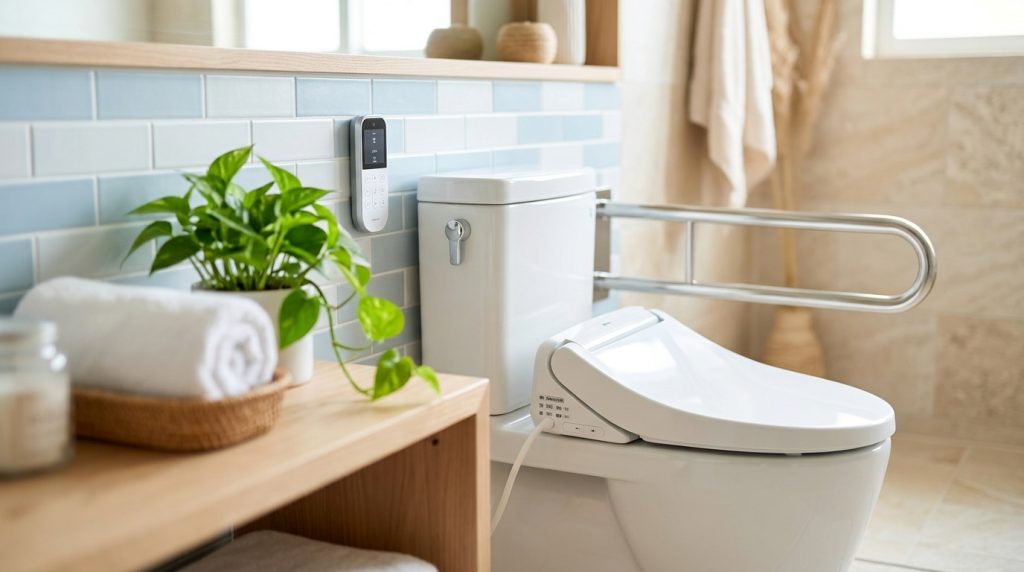
If you plan to buy a bidet for limited mobility after surgery for recovery, prioritize reachable controls, adjustable pressure, warm water and a stable fit with your toilet or raised seat. A remote or side panel is easier than a dial you have to twist toward. Check measurements against a raised seat before you buy, because a bulky seat or frame can change the fit.
Installing an electronic washlet seat restores bathroom independence during recovery by delivering a warm, aerated water stream at the press of a button cleansing thoroughly without requiring physical twisting or abrasive rubbing.
For post-operative patients, ergonomics and hands-free automation are essential. Models equipped with wireless wall-mounted remote controls let you adjust water pressure, nozzle angle, and temperature at eye level rather than straining toward a fixed side-arm panel.
Built-in warm-air dryers further eliminate the need to reach down with bath tissue or washcloths, while automatic open-and-close lids prevent unnecessary bending before and after use. Many of the accessibility features highlighted in our guide to the best bidets for elderly and senior users such as programmable one-touch user presets, gentle aerated sprays, and nightlights—provide the exact same post-surgical protection, keeping incisions clean and minimizing physical strain throughout rehabilitation.
When to Call Your Surgeon or Doctor
The NHS lists the signs of a wound infection as skin that is red, sore, hot or swollen, green or yellow fluid from the wound, a wound that opens, and feeling generally unwell or feverish. It can start 2 to 3 days after surgery and last until the wound heals, usually 2 to 3 weeks. After hemorrhoid surgery, MedlinePlus also lists a lot of pain or swelling, heavy rectal bleeding, and being unable to pass urine or have a bowel movement because of pain. Contact your GP or surgical team straight away if you notice any of these.
Frequently Asked Questions
Can I use a bidet after hemorrhoid surgery?
Often, but ask your surgeon. Use lukewarm water at the lowest pressure, and pat dry. Some bleeding is expected, especially after the first bowel movement.
Can I use a bidet after hip replacement?
It can help you avoid twisting and reaching, which the NHS advises against for about six weeks. Check that it fits your raised toilet seat, and follow your surgeon’s precautions.
How soon after surgery can I use a bidet?
There is no universal timing. It depends on the operation, so follow your discharge instructions and ask your team if they don’t mention it.
Is a bidet better than a sitz bath after surgery?
They do different jobs. A sitz bath soothes, and a bidet cleans. A study summarized by a colorectal practice found no significant difference between sitz baths and warm water sprays for recovery after hemorrhoid surgery, so many people use both if their surgeon agrees.
Can a bidet cause infection after surgery?
I’m not aware of evidence that it does when used gently with a clean nozzle, but a dirty nozzle, shared use or damp skin can add risk. Keep your routine clean and watch for signs of infection.
Final Thoughts
Using a bidet after surgery can make the bathroom easier and gentler, particularly when you can’t bend, twist or wipe comfortably. Keep the water lukewarm, the pressure low and the aim away from any wound, keep the nozzle clean, and follow your surgeon’s instructions first. If you notice signs of infection or anything that worries you, call your doctor.