A bout of diarrhea turns the bathroom into the busiest room in the house, and the skin pays for it. Every trip means more wiping, and the skin around the anus can go from tender to raw in a day. If you have a bidet, you may be wondering: can you use a bidet with diarrhea, or will it make things worse?
You can, and it is usually kinder than paper. Water cleans without rubbing, which protects sore skin. The catch is that you are ill, you are going often and germs can spread, so the way you use the bidet matters. This guide explains how to set it up, how to keep it hygienic, and when diarrhea needs a doctor.
Can You Use a Bidet With Diarrhea?
Yes. A bidet is usually gentler than repeated wiping, and NHS hospital guidance on sore skin from bowel problems lists a bidet as a way to wash after bowel movements. Use lukewarm water at low pressure, rinse briefly, pat dry, and keep the nozzle and your hands clean so you don’t spread germs.
If diarrhea lasts more than two days, or you have blood, severe pain, fever or signs of dehydration, see a doctor.
Why Diarrhea Irritates Skin and Why Wiping Makes It Worse
Digestive Juices Sting
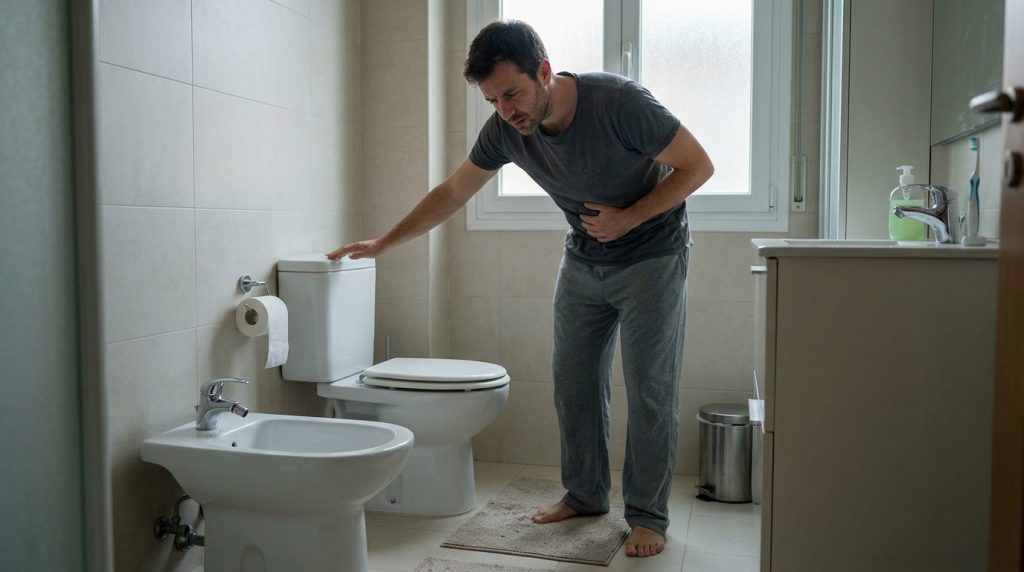
NHS guidance explains that digestive juices in loose stools can irritate the skin around the anus. Infection, poor fluid intake and general ill health also make the skin more likely to get sore.
The Wiping Problem
Frequent wiping, or stool that is hard to clear, damages the sensitive skin around the anus. Each wipe is small, but ten wipes in a day add up, and dry paper on irritated skin only adds to the damage.
How Water Breaks the Cycle
Water lifts stool away without friction. That is why the same NHS guidance recommends plain warm water, applied by a bidet, a shower attachment or a small jug, rather than rubbing. If your skin is already sore, our guide to whether a bidet can irritate your skin explains how to keep the stream gentle.
How a Bidet Helps When You Have Diarrhea
If you are asking whether you can use a bidet with diarrhea, these are the practical advantages.
Cleaner With Less Rubbing
Loose stool smears, and paper pushes it around. Water rinses it off in seconds, so you need fewer passes and much less friction.
Less Soreness and Itching
Left behind, stool keeps irritating the skin. A thorough rinse removes it, which can cut the soreness and itching that follow. And guidance still stresses that skin which is broken or persistently sore should be seen by a nurse or doctor.
Easier When You Are Weak or Tired
Diarrhea can leave you drained. A bidet lets you stay seated and rinse quickly instead of twisting around for repeated wiping, which matters when you are unsteady or dehydrated.
Bidet vs Toilet Paper for Diarrhea
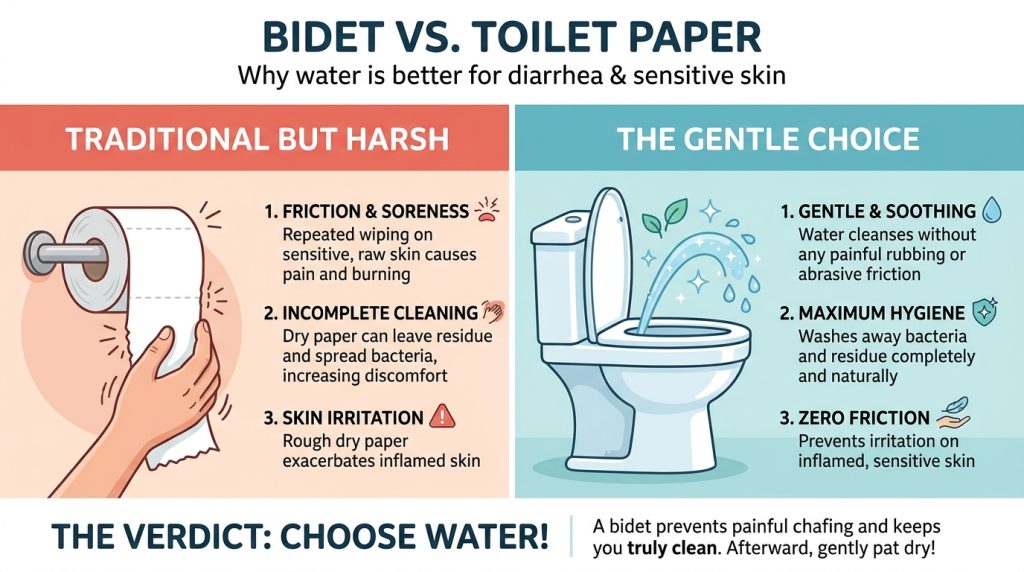
Soft paper still has a role in patting dry. But as a main cleaning method, water is gentler. If you’re wondering about the difference between a bidet versus toilet paper, our full comparison explains all you need to know. If you don’t have a bidet, the medically it’s suggested a small jug of plain warm water or a soft disposable cloth, and warns against flannels and sponges.
How to Use a Bidet Safely With Diarrhea, Step by Step
- Finish on the seat first. Don’t rush the rinse while you are still going.
- Set lukewarm water and low pressure. Sore skin reacts badly to a hard or hot stream.
- Rinse for 15 to 30 seconds. Aim at the area and let the water do the work.
- Pat dry. It’s advisable to pat dry, not rubbing, with soft toilet paper or a soft bidet towel. Remember to pratcise a proper bidet towel etiquette.
- Wash your hands with soap and water. Rinsing the bottom doesn’t clean your hands.
- Flush and close the lid if you have one, then wash your hands again if you touched anything.
Repeated Trips
One short rinse per visit is enough, even if you are going often. Repeating long washes can dry the skin, so keep them brief and gentle.
Which Nozzle to Use
If your bidet has two nozzles, use the rear one for the bowels. The difference between front and rear wash explains why women shouldn’t use the rear nozzle on the front.
Fluids and Rest
A bidet helps with cleaning, not with recovery. Keep drinking fluids, as it is noted that dehydration is a warning sign to watch for.
Hygiene: Can a Bidet Spread Germs When You Are Sick?
Diarrhea is often infectious. Mayo Clinic lists norovirus, bacteria such as E. coli, parasites and C. difficile among the causes, so a few precautions matter.
Nozzle Contamination
A nozzle that has been near stool can carry bacteria. A Japanese hospital study of spray nozzles and sprayed water on 10 toilet seats on a ward found that routine physical cleaning was satisfactorily effective, and the authors recommended general cleaning to reduce the risk of spreading drug-resistant bacteria through bidet use in hospitals. At home, always follow a routine and properly clean your bidet nozzle, which is part of a bidet hygiene in general. Also clean the nozzle after you recover too.
If others use the same bathroom, wipe the nozzle, the controls and the seat after you use it, and use a disinfectant. For norovirus, the CDC says to disinfect with a bleach solution or an EPA-registered norovirus disinfectant, leave it on for at least 5 minutes and clean again with soap and hot water.
Handwashing Still Matters Most
It’s best to wash with soap and water for at least 20 seconds after using the toilet, and that hand sanitizer doesn’t work well against norovirus. The virus can stay in stool for 2 weeks or more, so keep washing after you feel better. Don’t prepare food for others until at least 2 days after symptoms stop.
Cleaning Up After an Accident
For norovirus, the CDC advises wearing rubber or disposable gloves, wiping up stool with paper towels and bagging them, then disinfecting. Remove soiled clothes and linens straight away, handle them gently without shaking, and wash them with detergent in hot water on the longest cycle, then dry on high heat. Wash your hands afterwards with soap and water.
Special Situations
After Antibiotics or a Hospital Stay
Mayo Clinic notes that C. difficile can cause diarrhea after antibiotic use or a hospital stay. If your diarrhea began that way and isn’t settling, see a doctor, and be strict about cleaning the nozzle and washing your hands with soap and water.
If You Also Have Hemorrhoids or a Fissure
Frequent loose stools can inflame both. Keep the settings gentle, and also, if you have hemorrhoids, there are ways bidets and hemorrhoids work together and likewise bidet with an anal fissure which have different guidelines.
When Stool Leaks Between Trips
When stool are left on the skin, or leaking, irritates it just as much. A quick rinse, a gentle pat dry and a barrier cream if advised protect the skin. If leaking keeps happening, talk to a nurse or doctor.
Choosing Bidet Settings for Diarrhea
A few settings make a real difference. Pick low pressure first, and warm water if your model has a heater, since cold water is uncomfortable on sore skin. A soft, wide spray beats a narrow jet. Some bidets have a warm-air dryer, which fits the NHS advice that a hairdryer on a low or cool setting can be comfortable when skin is very sore, but keep it on low.
Protecting Irritated Skin
NHS skin care guidance for bowel problems gives a clear checklist:
- Plain warm water is best. Avoid disinfectants, antiseptics, scented soap, talc, deodorants and alcohol-based baby wipes. If you still wants to or wondering whether you need soap with a bidet I have already explained, if there’s anything to add.
- Pat dry, don’t rub. A hairdryer on a low or cool setting, held away from water, can be more comfortable if the skin is very sore.
- Consider a barrier cream. A simple one, such as zinc and castor oil or petroleum jelly, in a small amount, forms a protective layer. Wash off the old layer before reapplying, and don’t use creams unless advised.
- Wear cotton underwear and loose clothes, and let air reach the area.
- See a nurse or doctor if the skin is broken or the soreness persists, since it may be infected.
Mistakes to Avoid
- High pressure. A hard jet on sore skin hurts and irritates.
- Hot water. It damages delicate skin. Keep it lukewarm.
- Long or repeated washes. One short rinse per visit is enough.
- Scented products. Plain water, no scented products or soaps.
- Skipping the dry-off. Damp skin stays irritated.
- Sharing a bidet without cleaning it. Wipe the nozzle and the controls, and wash your hands.
- Skipping handwashing. The bidet doesn’t replace it.
When to See a Doctor
Acute diarrhea usually clears within a few days. Mayo Clinic says adults should see a doctor if:
- diarrhea lasts more than two days without improvement;
- signs of dehydration develop;
- there is severe belly or rectal pain;
- stools are bloody or black;
- fever is above 102°F (39°C).
Also get advice if the skin around your bottom is broken or stays sore, since it may need treatment. Diarrhea that lasts for weeks often signals another problem and needs checking.
Frequently Asked Questions
Is a bidet good for diarrhea?
Usually. It cleans without friction, which helps sore skin, and most skin care guidance lists a bidet as a way to wash after bowel movements. Keep the water lukewarm and the pressure low.
Can a bidet make diarrhea irritation worse?
Yes, if the pressure is high, the water hot or the washes long and frequent. Scented soap and skipped drying cause the same trouble.
Can you use a bidet and toilet paper together?
Yes. Use the bidet to clean and a little soft paper to pat dry. Press, don’t rub.
How do you stop the burning after diarrhea?
Wash with plain warm water, pat dry, and consider a simple barrier cream, as the NHS guidance suggests. If the skin is broken or the burning persists, see a nurse or doctor.
Can a bidet spread stomach bugs?
A dirty nozzle or poor handwashing can. A hospital study found routine cleaning of nozzles was satisfactorily effective, and the CDC stresses soap-and-water handwashing for norovirus.
Final Thoughts
Can you use a bidet with diarrhea? Yes, and it is usually kinder to sore skin than repeated wiping. Keep the water lukewarm, the pressure low and each rinse short, pat dry, clean the nozzle, and wash your hands with soap and water every time. If diarrhea lasts more than two days or you have blood, fever or signs of dehydration, see a doctor.