Bidet myths and misconceptions persist because most Americans never grew up around one, bathroom hygiene is a taboo topic, and many people assume bidets need major plumbing work. Unfamiliarity fills the gap with guesses. The facts are simpler: modern bidets use clean supply water and install in under an hour.
The dry-paper habit has history behind it. Indoor plumbing began reaching American homes in the 1840s, mostly wealthy ones. Commercial toilet paper arrived in 1857, when New Yorker Joseph Gayetty sold “medicated paper,” and perforated rolls followed in 1890. One history of the bidet adds that American soldiers in World War II linked European bidets with brothels. Paper became the default, and bidets stayed unfamiliar.
13 Bidet Myths and Misconceptions
1) Bidets Spray Recycled Toilet Bowl Water
Misconception: The spray is dirty water pulled from the bowl.
Reality: Bidet water comes from the same supply line that feeds your sink and shower, not from the bowl or tank, according to Bio Bidet and Brondell. Plumbing codes enforce the separation. Michigan’s residential code, for example, requires bidets to be isolated from the drinking supply with an air gap or vacuum breaker, so wastewater cannot flow back into the pipes. Seats and attachments simply tee off the same line that fills your toilet tank.
2) Bidets Spread Bacteria and Cause Infections
Misconception: Using a bidet will give you an infection.
Reality: The risk is real but narrow, and it comes down to nozzle upkeep. A Japanese hospital study found bacteria on 254 of 292 warm-water nozzles, and hospital outbreaks of resistant bacteria have been linked to bidets. Homes look better: a campus survey found E. coli in the spray of 3 of 127 toilets. Rinse and clean the nozzle regularly and avoid shared hospital units if you are immunocompromised. Women should aim the spray front to back. Among these bidet myths and misconceptions, this is the one with a kernel of truth.
3) Bidets Waste Huge Amounts of Water
Misconception: A bidet will inflate your water bill.
Reality: One wash uses about one-eighth of a gallon. Six washes a day comes to roughly three-quarters of a gallon, under 274 gallons a year, per ManyBidets. A single flush on a modern toilet uses 1 to 2 gallons, and older toilets use 3.5 to 7, so flushing dwarfs the wash. Sellers also claim a roll of toilet paper takes up to 37 gallons to make. That figure is vendor-sourced and widely repeated, so treat it as an estimate. Even without it, a bidet’s water cost is small.
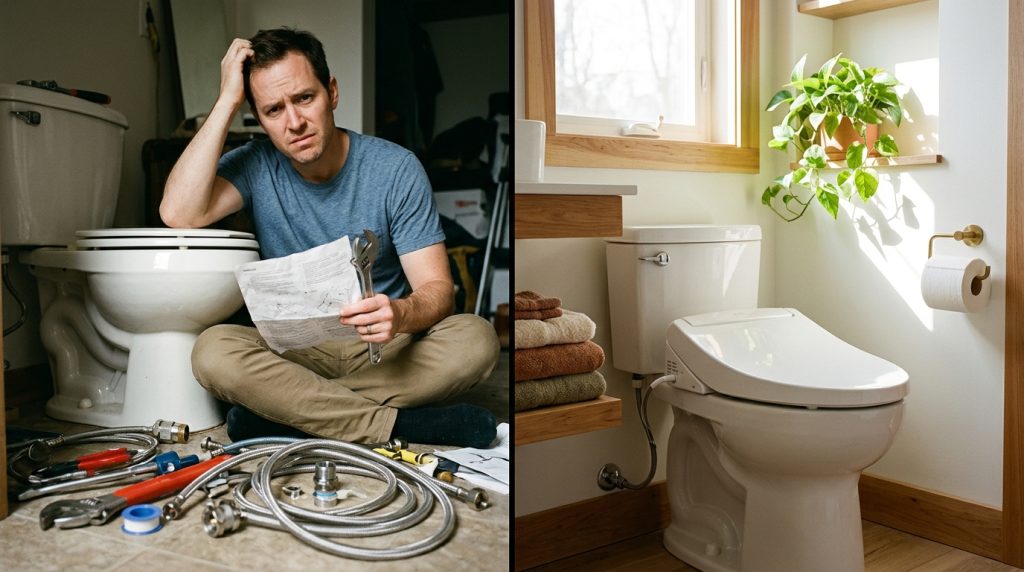
4) You Need a Licensed Plumber and Major Renovations to Install One
Misconception: Installing a bidet means opening walls and hiring a plumber.
Reality: Seats and attachments connect through a T-valve on the toilet’s supply line. Bio Bidet puts a typical install at 20 to 45 minutes with basic tools, and HomeAdvisor says a plumber needs about 30 minutes for a seat. Standalone floor bidets are the exception: HomeAdvisor lists about $1,180 for new plumbing lines. Electric seats also need a GFCI-protected outlet nearby, which may mean an electrician. Cold-water attachments need no electricity, so there is no outlet to worry about.
5) Bidets Are Only for Luxury Homes and the Wealthy
Misconception: Bidets are an expensive import for high-end bathrooms.
Reality: HomeAdvisor puts handheld sprayers at $40 to $120, attachments at $80 to $120 and seats at $170 to $650. The steep prices, $1,200 to $2,000 for a bidet toilet, belong to the premium end. One seller estimates paper use falls by at least 75%, which offsets some of the cost over time. Running costs stay small too: one calculator models an electric seat at about 24 kWh a year, roughly $3.
6) The Spray Is Shockingly Cold and Uncomfortable
Misconception: Every bidet blasts ice-cold water.
Reality: Basic attachments do use cold line water, but fixes exist. Electric seats heat the wash, and some models adjust up to about 102°F. Dual-temperature attachments tap your sink’s hot line, which should sit within about 6 feet of the toilet. Run the sink first, since hot water takes a moment to arrive. Seat warmers draw roughly 50 to 70 watts, so use an eco mode.
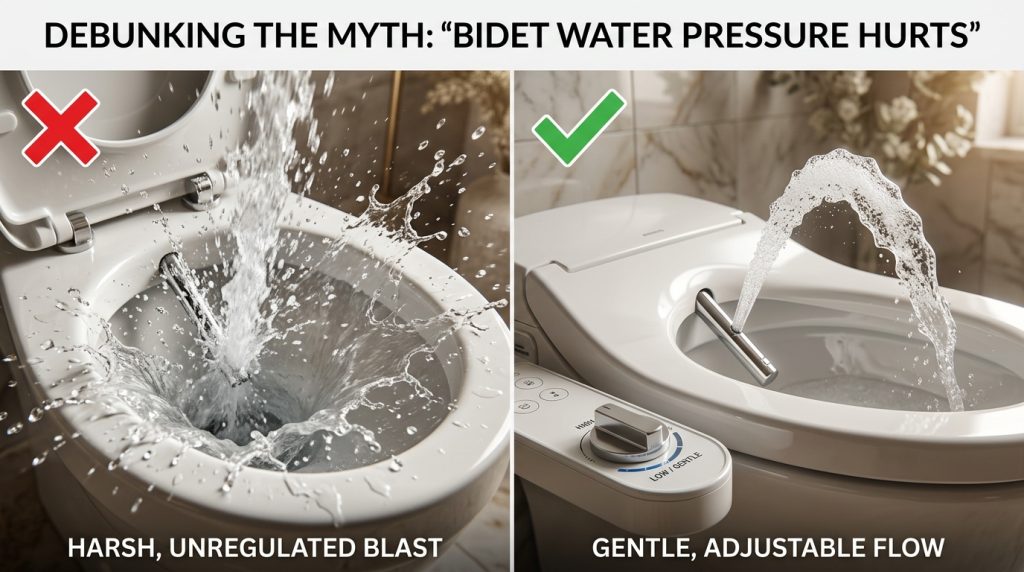
7) High Water Pressure Will Hurt or Cause Injury
Misconception: The jet is strong enough to injure you.
Reality: Attachments have a pressure dial, and electric seats regulate flow with a pump, which feels gentler than full household pressure, per BidetKing. Harm comes from misuse. One review recorded 10 anterior fissures in bidet users who washed for 1 to 5 minutes, and a clinic it describes limits cleaning to under 5 seconds with weak pressure and a wide jet.
The same review found anal itching in 14% of surveyed bidet users, linked to washing before defecation and to warm water. Some bidet seats are also rated for static supply pressure only up to 110 to 116 PSI, so very high-pressure homes may need a regulator. Start low and keep washes short.
8) Using a Bidet Leaves You Soaking Wet
Misconception: You will leave the toilet dripping.
Reality: The wash targets a small area, and most water runs into the bowl. Sharp HealthCare advises patting dry or air drying if your bidet has no dryer. Seats with warm-air dryers cut paper use further. A few sheets of paper or a small towel handles the rest. If you skip paper entirely, keep a dedicated towel on a hook and wash it often.
9) The Spray Nozzle Gets Dirty and Covered in Waste
Misconception: The nozzle sits in the line of fire and stays filthy.
Reality: Most nozzles are angled behind the target area, retract behind a cover, and rinse before and after each use, according to Brondell and BidetKing. A 2022 Biocontrol Science study found flowing water washes contamination away and daily nozzle cleaning lowers bacterial counts in spray water. Stainless steel nozzles resist bacteria and corrosion, and some models sell replacement nozzles. Buildup can still form on busy toilets, so occasionally remove the seat, wipe the nozzle with dish soap and scrub it with a toothbrush.
10) Bidets Are Difficult or Unsafe for the Elderly and Mobility-Impaired
Misconception: Bidets are too fiddly and risky for older adults.
Reality: They often make toileting easier. Sharp HealthCare notes that bidets help older adults and people with mobility issues clean themselves while keeping privacy, and some doctors recommend them. Large remotes, presets, heated seats and dryers reduce reaching and wiping.
Two cautions: use grab bars that do not rely on the toilet’s bolt holes, and ask a clinician first if you have incontinence or itching. Let someone else try the unit first, and consider a comfort-height toilet if you are replacing one.
Misconception: Sharing a bidet means sharing germs.
Reality: Keep the nozzle off your body, let it rinse between users, and wash your hands afterward, as you would with paper. In a simulation described in a medical review, hand bacteria were significantly lower when spray water was used before wiping. In a hospital ward test, routine physical cleaning kept bacterial levels acceptable. The exception is immunocompromised people: the review advises dedicated units or avoiding shared bidets in hospitals.
12) Dry Toilet Paper Cleans Just as Well as Water
Misconception: Paper does the same job.
Reality: Wiping moves residue around; water rinses it off. Sharp HealthCare says water cleans skin surfaces and crevices more thoroughly than wiping, which can spread fecal matter and bacteria, and aggressive wiping can irritate skin and hemorrhoids.
Some “cleaner” claims come from manufacturers, so weigh them accordingly. A medical review also notes that bidet use contributes to hand hygiene and local comfort. Water plus a gentle pat dry is the milder routine.
13) Bidets Are Illegal in the United States
Misconception: Bidets are banned in America.
Reality: They are legal and sold at major U.S. retailers, with installation guides written for 120 V outlets. Codes regulate rather than ban them. Michigan’s residential code requires an air-gap or vacuum-breaker fitting, and seat makers such as Moen list conformity to ASME A112.4.2 / CSA B45.16 for personal hygiene devices. Standalone bidets must meet the same isolation rule. Check local rules before adding an outlet or a standalone fixture.
Conclusion
Most bidet myths and misconceptions fall apart against basic plumbing and published research. The one real caution is upkeep: rinse and clean the nozzle, keep washes short at low pressure, and see a doctor if you have itching, fissures or incontinence. Cold water, cost, installation and legality all have simple answers.
Check the details that matter: toilet shape, water pressure and outlet access. Then pick an attachment or seat that fits your budget, and try it for a month. Bidet myths and misconceptions should not decide this purchase; your bathroom and budget should.