
Traditional toilet design hasn’t changed much in a century, but the way we clean ourselves is evolving rapidly. While clip-on attachments and add-on seats have become popular, luxury home construction and modern bathroom renovations are increasingly centered around a single, unified fixture: the smart toilet.
If you are exploring bathroom upgrades, you have likely encountered these sleek, tankless porcelain fixtures. But what is an integrated bidet toilet, how does it work under the hood, and is the substantial investment worth it over a standard add-on seat?
What Is an Integrated Bidet Toilet?
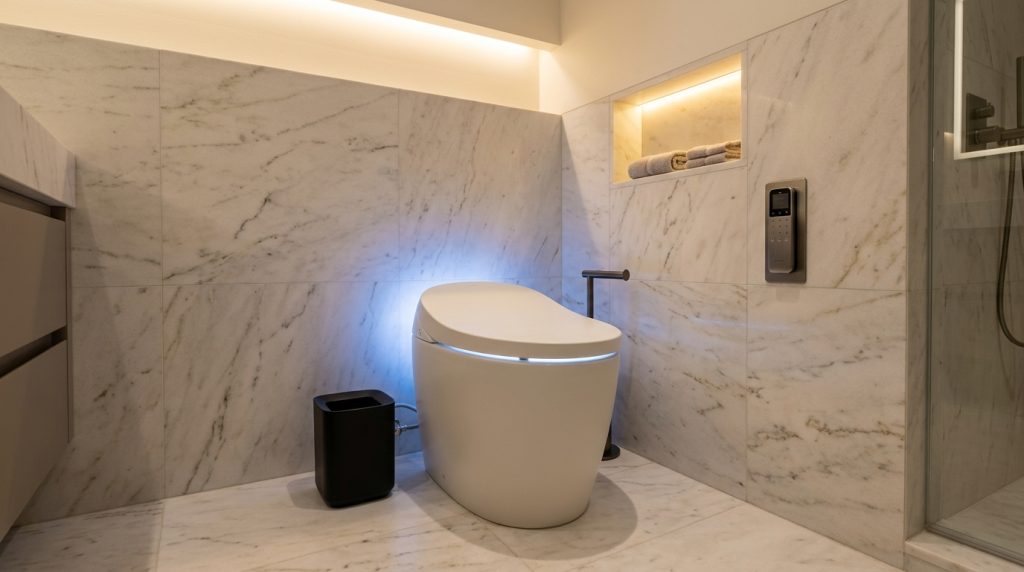
An integrated bidet toilet often called an all-in-one bidet toilet or toilet with built-in bidet is a single electronic fixture engineered from the ground up to combine a ceramic toilet bowl and a full-featured bidet wash system. It features instant warm-water washing, a heated seat, warm-air drying, and automatic flushing inside a streamlined, tankless chassis.
Unlike a standard toilet modified with an aftermarket seat, an integrated bidet toilet conceals all plumbing valves, water pumps, electrical components, and drainage lines inside the porcelain frame, eliminating external hoses and dangling power cords.
How Does an Integrated Bidet Toilet Work?
Understanding how a bidet works in an integrated unit involves exploring how its internal mechanical, heating, and electronic systems interact:
1. Water Supply, Heater, and Pump
Standard toilets rely on gravity and a raised porcelain tank. Integrated units typically use direct line pressure paired with an internal electric booster pump. When you trigger a wash, incoming tap water routes through an on-demand ceramic core heater, providing endless warm water without requiring a bulky hot-water tank.
The wash water flows straight from your home’s potable drinking supply line — never from the bowl or flush reservoir—and complies with ASME A112.4.2 bidet plumbing performance standards.
2. Spray Nozzles and Wash Modes
A motorized stainless steel or antimicrobial plastic wand extends into the bowl when activated. It offers multiple customizable wash modes:
- Posterior Wash: A concentrated stream for rear cleaning.
- Feminine Wash: A softer, wider spray angled further forward. This type of bidet toilet is one of the most sanitary bidet for woman, because it provides proper front-to-back water direction keeps feminine hygiene completely clean and safe.
- Oscillating & Pulsating Modes: The wand moves back and forth to widen coverage, or alternates pressure pulses to stimulate bowel movements for users seeking how to use a bidet for constipation relief.
3. Dryer, Heated Seat, and Deodorizer
After the wash cycle completes, an integrated warm-air dryer fan engages, which removes the everyday question of how to dry off after using a bidet
without relying on abrasive paper. An active carbon filter pulls air from the bowl through a catalytic deodorizer to neutralize odors before they escape into the bathroom.
4. Smart Controls and Automation
Operation is managed via a wall-mounted wireless remote control, an auxiliary side dial, or automatic sensors. High-end units feature radar proximity sensors that lift the lid as you approach, illuminate the bowl with a nightlight, and initiate an automatic, hands-free cyclone flush the moment you stand up.
Do Integrated Bidet Toilets Need Electricity?
Yes. An integrated bidet toilet is a dedicated electrical appliance that requires continuous power to operate its pumps, heating elements, air blowers, and sensors.
Outlet and GFCI Requirements
Under the National Electrical Code (NFPA 70) ,all bathroom receptacles serving smart toilets must be protected by a Ground-Fault Circuit Interrupter (GFCI). Most integrated toilets require a standard 120V / 15A dedicated circuit installed on the wall within 3 feet of the toilet base.
What Happens in a Power Cut?
Because the primary flush valve is electric, manufacturers include a manual override for emergencies. Most models feature a concealed mechanical flush button on the lower side of the porcelain skirt, an auxiliary 9V battery backup port, or a manual pull cord behind the service panel so you can still flush waste during an electrical outage.
Running Cost
Despite their high peak wattage (drawing 1,000 to 1,400 watts while heating water), integrated units operate in short bursts of 60 to 90 seconds. In standard standby eco-modes, electricity costs average between $1.50 and $4.00 per month.
Integrated Bidet Toilet vs. Bidet Seat vs. Standalone Bidet
Choosing the right fixture requires comparing form factor, footprint, and installation complexity:
| Feature | Integrated Bidet Toilet | Bidet Toilet Seat | Standalone Bidet |
| Typical Cost | $1,200 – $4,500+ | $200 – $650 | $800 – $2,500+ |
| Space Required | Standard toilet footprint | Uses existing toilet | 15–18″ extra floor space |
| Installation | Full toilet swap + GFCI outlet | 20-min DIY bolt-on | Major rough-in plumbing |
| Aesthetic | Seamless, tankless, no exposed hoses | Exposed cords and water t-valves | Separate ceramic basin |
| Flushing | Automatic sensor-activated flush | Manual toilet handle | Separate waste drain (no poop) |
| Repair Factor | Specialized technician / parts | Swap out the seat easily | Standard sink plumbing parts |
| Best For | Full remodels, luxury master baths | Renters, retrofit budgets | Classic European architecture |
While add-on seats provide similar washing features at a lower entry price, they add visual clutter to the bowl. An integrated bidet toilet delivers a clean, architectural finish.
How Much Does an Integrated Bidet Toilet Cost?
Investing in an all-in-one bidet toilet involves three distinct expense tiers:
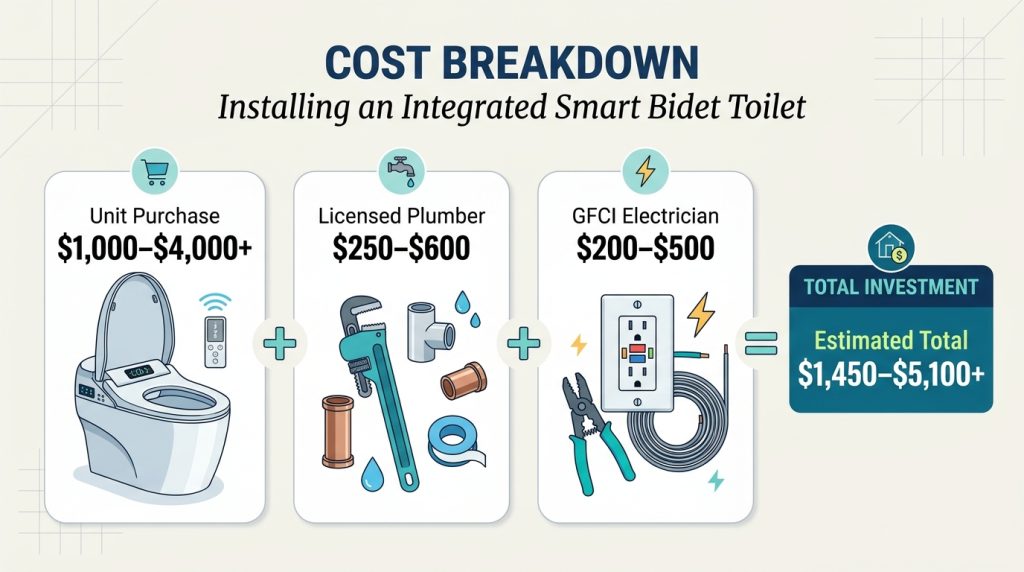
1. Unit Price Range
- Entry-Level Smart Bidets ($800 – $1,400): Brands like Horow, Woodbridge, and Alpha provide core essentials—heated seats, auto-flush, tankless instantaneous water heating, and wireless remotes.
- Mid-Tier High-Performance Units ($1,500 – $2,800): Models from Bio Bidet, Brondell, and Moen add auto-open/close lids, UV nozzle sanitization, and refined porcelain glazing.
- Premium Architectural Fixtures ($3,000 – $7,000+): Industry flagships such as the Toto Neorest series or Kohler Veil feature ultra-quiet cyclone flushing, ionized mist bowls, and sleek concealed wall-hung tanks.
2. Installation and Electrical Costs
Budgeting for a bidet must account for trade labor:
- Licensed Plumber: $250 to $600 to pull the existing toilet, reset the wax ring, verify floor flange integrity, and hook up water lines.
- Licensed Electrician: $200 to $500 to run a dedicated GFCI outlet near the toilet if one does not already exist.
3. Cost Over Time: Repairs and Warranties
Integrated toilets typically carry 1- to 3-year limited warranties (extendable on luxury lines). Because internal components are proprietary, replacement solenoids or circuit boards must come directly from the manufacturer.
Pros and Cons of an Integrated Bidet Toilet
The Advantages
- Flawless Design: No dangling plastic hoses, external T-valves, or awkward power cords stretching to a wall outlet.
- Hands-Free Hygiene: Sensor-activated auto-open, auto-flush, and auto-close reduce contact with bathroom surfaces.
- Better Health and Healing: A clinical study indexed on PubMed shows that targeted warm-water washing significantly lowers resting anal sphincter pressure, soothing irritation. The American Society of Colon and Rectal Surgeons (ASCRS) explicitly recommends water washing over dry paper for hemorrhoids and fissure management.
- Reduced Environmental Footprint: Research cited by Scientific American indicates that manufacturing a single roll of toilet paper consumes roughly 37 gallons of water, 1.3 kWh of electricity, and significant wood pulp. A bidet wash uses less than a pint of water, answering the common question: do bidets waste water?
The Disadvantages
- High Initial Price: Costs substantially more than a standard $200 porcelain toilet paired with an add-on seat.
- Complex Repairs: If the bidet pump malfunctions after the warranty expires, you cannot simply replace a $40 part at a local hardware store.
- Permanent Installation: These units are heavy (often 90 to 120 lbs) and designed to stay with the home, making them impractical for renters.
How Is an Integrated Bidet Toilet Installed?
Installing an all-in-one unit requires precise rough-in alignment:
- Space and Drain Rough-In: Most American homes use a standard 12-inch rough-in (the distance from the finished drywall to the center of the floor flange). Always verify whether the unit fits a standard 12-inch or custom 10/14-inch offset.
- Water Line Flow Rate: Tankless cyclone-flush systems require adequate water pressure—typically a minimum of 30 to 35 PSI dynamic flow—to flush properly without a standing gravity tank.
- Plumber vs. DIY: Unlike lightweight clip-on attachments, an integrated toilet weighs upwards of 100 pounds and requires a gas-tight seal on the sewer pipe flange. Hiring a licensed plumbing contractor is strongly recommended to protect manufacturer warranty coverage.
Who Should Buy an Integrated Bidet Toilet?
An integrated bidet toilet is best suited for specific homeowners and renovation projects:
- New Builds and Full Bathroom Remodels: When gutting a bathroom down to the studs, running dedicated electrical wiring and optimizing water rough-ins is straightforward and affordable.
- Seniors and Aging-in-Place Homeowners: Hands-free automatic flushing, self-opening lids, and warm-air drying provide essential independence for seniors who have difficulty twisting, reaching, or wiping.
- When a Bidet Seat Is the Smarter Buy: If you live in a rental property, have a functioning toilet that does not need replacement, or want to keep your project budget under $400, adding an aftermarket electric bidet seat delivers nearly identical washing performance at a fraction of the cost.
Frequently Asked Questions
Is an integrated bidet toilet worth it?
If you are already replacing an old toilet during a bathroom renovation and value minimalist aesthetics, automated touchless operation, and heated water washing, an integrated unit is well worth the investment. It eliminates visual clutter and adds tangible resale value to a luxury home.
Can you add a bidet to a toilet instead?
Yes. You can install an aftermarket electric bidet seat or a non-electric mechanical attachment onto your existing toilet in under 30 minutes without replacing the porcelain bowl.
How long do bidet toilets last?
The vitreous china ceramic bowl lasts a lifetime. The internal electronic components, valves, and motorized pumps typically last between 7 and 12 years with routine maintenance and water filter replacements.
Are integrated bidet toilets hard to clean and repair?
They are actually easier to clean on the outside because their skirted porcelain base eliminates the dust-catching curves and exposed trapways of traditional toilets. For internal electronic repairs, however, you will need brand-specific replacement components or an authorized service technician.
An integrated bidet toilet combines luxury aesthetics and modern hygiene into a single fixture. By removing the need for toilet paper, automating everyday functions, and concealing all plumbing lines, it transforms the bathroom into a cleaner, more comfortable space.