
If you are planning a bathroom upgrade, you might be asking yourself: do bidets need electricity?
Before running electrical wiring or calling a plumber, it helps to understand how different bidet styles actually operate. Depending on the features and design you choose, the answer might surprise you. Here is what you need to know.
Do Bidets Need Electricity?
No, bidets do not need electricity. Millions of people around the world use bidets every single day without plugging anything into a wall.
Whether a bidet requires power depends entirely on what kind of features you want. Basic models run purely on your home’s natural water pressure. Powered models, on the other hand, need electricity to heat water, warm the seat, and blow warm air.
If you are wondering whether to buy a powered seat or stick with a simple mechanical model, here is what you need to know before touching your bathroom plumbing.
Can a Bidet Work Without Electricity?
Yes. Absolutely. Every mechanical non electric bidet operates without cords, batteries, or outlets. It bolts right onto your toilet, taps into your cold water supply pipe, and sprays instantly whenever you turn a mechanical dial.
How Does a Non Electric Bidet Work?
A T-valve on the toilet’s supply line splits the water. One side keeps filling the tank. The other goes through a hose to the bidet, and a knob or lever opens it. That is how bidets work without power: your home’s water pressure does the pushing, as Architecture Lab explains.
Most units tap the cold line. Some attachments also connect to the hot valve under a nearby sink, so you can get warm water without a plug.
The toilet and the bidet share one supply. Bio Bidet’s troubleshooting guide uses this as a quick test: if the toilet refills, the bidet has water too. You set the pressure with the dial. A power cut changes nothing.
Is There a Bidet That Doesn’t Need to Be Plugged In?
If you want something cord-free, you have several reliable choices:
- Bidet attachments: Thin brackets that slip directly under your existing toilet seat.
- Non-electric bidet seats: Full seat replacements that use internal mechanical valves.
- Handheld sprayers (shattafs): Trigger-operated spray nozzles that hang on the side of the tank.
- Portable squeeze bidets: Soft travel bottles with angled nozzles that require zero plumbing.
Electric vs Non Electric Bidet: What Are the Real Differences?
Choosing between an electric vs non-electric bidet comes down to three factors: comfort, cost, and your bathroom layout.
A non-electric bidet runs entirely on your home’s existing water line pressure—no cords or batteries required. It sprays ambient-temperature water, uses manual turn dials, and costs around $25 to $60. You pat dry with a few squares of toilet paper, but DIY installation takes only 15 minutes.
An electric bidet seat replaces your existing seat and plugs into a standard 120V GFCI outlet. Costing $150 to $600+, it adds instant warm water, a heated seat, and a warm-air dryer for hands-free cleaning.
Mechanical models get you clean just as well as high-end seats. What you pay for on an electric unit is comfort: warm water in winter, a heated seat ring, and warm air to dry off hands-free.
Do Bidets Need an Outlet in the Bathroom?
Yes, always. Electric bidet seats come with a standard 3-prong plug on a 3- to 4-foot cord. You cannot plug them into just any socket.
Because bathrooms are wet environments, safety standards like NFPA National Electrical Code (NEC) Section 210.8 require a GFCI (Ground-Fault Circuit-Interrupter) outlet near water fixtures. This prevents shocks if water splashes near the plug. Certified electric seats also undergo testing under UL 1431 safety standards for personal hygiene appliances.
If you don’t have an outlet within reach of your toilet, running a basic extension cord across the floor is a tripping hazard and violates code. In that case, you will either need to hire an electrician to install a nearby GFCI outlet or stick with a mechanical attachment.
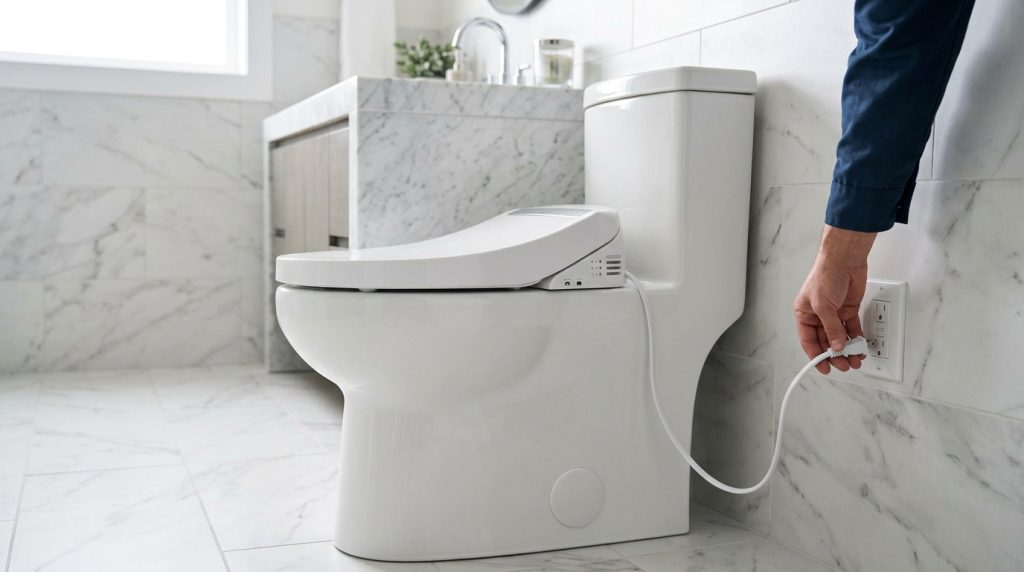
Do Bidets Use a Lot of Electricity?
Many homeowners worry about high utility costs. and one question they always ask is do bidets use a lot of electricity? well, not really. Even though heated seats draw substantial peak wattage when active, they run for only a minute or two per wash.
- Instant (tankless) heaters: These draw 1,200 to 1,400 watts, but only for the 45 seconds you wash. They draw virtually zero power while idle.
- Tank heaters: These store warm water in a small tank, drawing 50 to 70 watts periodically to keep the water warm around the clock.
According to baseline kilowatt-hour rate data from the U.S. Energy Information Administration (EIA), running a modern electric bidet adds roughly $2 to $5 a month to your electric bill.
What Are the Downsides of Using a Bidet?
Bidets offer major hygiene benefits, but they aren’t without drawbacks.
- Cold winter water on non-electric units: In winter, municipal pipes get cold. A burst of 45°F water can be jarring.
- Hard water buildup: High mineral content in tap water can clog small nozzle holes over time.
- Bathroom modifications: Adding an electric seat might require hiring an electrician to add an outlet next to the bowl.
- Leak risks: Adding any pressurized plumbing fitting introduces potential drip points if rubber seals are misaligned. Standard plumbing hardware should meet IAPMO backflow prevention standards and ASME flexible water connector guidelines to protect your home.
Which One Should You Buy?
- Pick a non-electric bidet if: You are renting, have no outlet near the toilet, want to spend under $50, or want a 15-minute DIY setup.
- Pick an electric bidet if: You own your home, already have a bathroom outlet, hate cold water, or want warm air drying.
You don’t need electricity to get clean. If you’re on the fence, start with an affordable mechanical attachment. You can always upgrade to a heated electric seat down the road.
Final Thoughts
Do bidets need electricity? Only if you want warm water, a heated seat or a dryer. If you are renting, on a budget, or just curious, a non electric attachment is the easy start and it keeps working in a blackout. If you want comfort year round and have an outlet by the toilet, an electric seat costs only a few dollars a year to run.